






What's Happening?
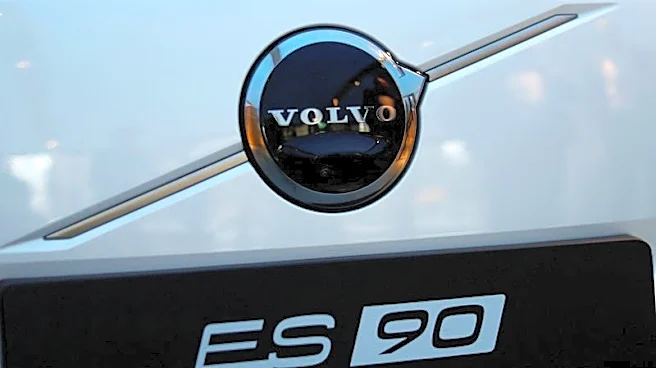
Volvo Cars, primarily owned by China's Geely Holding, has received authorization from the U.S. government to continue importing and selling vehicles equipped with 'connected car' technology. This approval comes in the wake of stringent regulations introduced
by President Joe Biden's administration in January 2025, which aimed to limit the presence of Chinese-developed software in the U.S. automotive market. These rules, effective from March 2026, were part of a broader strategy to curb Chinese influence in critical technology sectors. Volvo Cars, which sold 121,600 vehicles in the U.S. in 2025, had to engage with the U.S. Department of Commerce to secure this specific authorization, allowing it to maintain its growth trajectory in the American market. The company plans to expand its U.S. production capabilities, including the introduction of a new hybrid model by the end of the decade.
Why It's Important?
The approval for Volvo Cars to continue importing vehicles with 'connected car' technology is significant as it highlights the complex interplay between international trade, technology, and national security. The U.S. government's decision reflects a cautious approach to balancing economic interests with security concerns, particularly in the context of Chinese technology. For Volvo, this approval is crucial for sustaining its market presence and growth in the U.S., a key market for the automaker. The decision also underscores the challenges faced by foreign companies in navigating U.S. regulatory landscapes, especially those with significant Chinese ownership. This development could influence future policy decisions and trade relations between the U.S. and China, impacting other industries reliant on cross-border technology integration.
What's Next?
Volvo Cars plans to increase its production in the U.S., with a focus on hybrid models, as part of its strategy to adapt to the evolving regulatory environment. The company aims to leverage its South Carolina plant to boost production capacity and meet U.S. market demands. Additionally, the ongoing discussions between Volvo and U.S. authorities may set a precedent for other automakers with Chinese ties seeking to operate in the U.S. market. The broader implications for U.S.-China trade relations and the automotive industry's regulatory framework will likely continue to evolve, with potential adjustments to existing policies based on geopolitical and economic considerations.