

What's Happening?
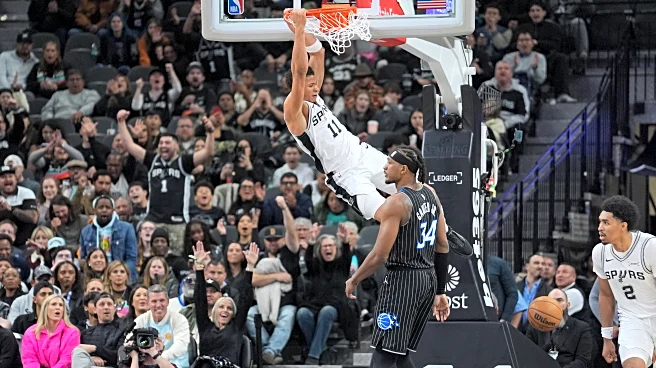
The 2026 NBA Draft is shaping up to be a significant event with a strong class of prospects. The top three players, Darryn Peterson, AJ Dybantsa, and Cameron Boozer, are generating considerable excitement. AJ Dybantsa, from BYU, has shown impressive development, scoring 27.8 points per game recently, making him a top contender for the Indiana Pacers' first pick. The Washington Wizards, with the second pick, are eyeing Kansas' Darryn Peterson, who, despite a hamstring injury, remains a top choice due to his polished skills. The Charlotte Hornets, picking third, are likely to select Duke's Cameron Boozer, known for his consistency and winning impact. The draft order, determined by a Tankathon spin, reflects the fluidity and strategic considerations
of NBA teams as they prepare to bolster their rosters with these promising talents.
Why It's Important?
The 2026 NBA Draft is crucial for teams looking to rebuild or strengthen their rosters with young talent. The top prospects, such as AJ Dybantsa, Darryn Peterson, and Cameron Boozer, offer a mix of immediate impact and long-term potential. For teams like the Indiana Pacers and Washington Wizards, securing a top-tier player could significantly alter their competitive landscape. The draft also highlights the strategic decisions teams must make, balancing current needs with future potential. This year's draft class is particularly strong in point guards, which could influence team strategies and trades. The decisions made during this draft will have lasting impacts on team dynamics and the overall competitive balance in the NBA.
What's Next?
As the draft approaches, teams will continue to evaluate prospects through college performances and pre-draft workouts. The upcoming conference play will be critical for players like AJ Dybantsa and Darryn Peterson to solidify their positions. Teams will also consider potential trades to improve their draft positions or acquire additional picks. The draft will likely see strategic moves as teams aim to address specific needs, such as backcourt strength or frontcourt depth. The outcomes of these decisions will shape the NBA landscape for years to come, influencing team success and player careers.