







What's Happening?
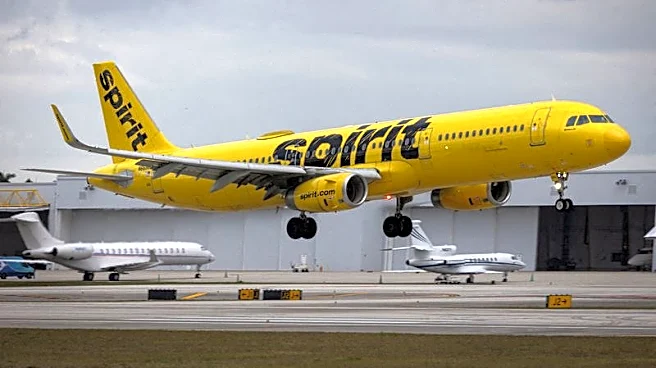
Travelers at airports across the U.S. are facing confusion and disruption following the sudden shutdown of Spirit Airlines. Many passengers, like Yash Kothari at Philadelphia International Airport, arrived for their flights only to learn that the airline
had ceased operations. The announcement, made at 1 a.m., caught many travelers off guard, leaving them to scramble for alternative travel arrangements. Spirit Airlines, which had been in operation for 34 years, cited rising fuel costs and financial difficulties as reasons for the shutdown.
Why It's Important?
The unexpected shutdown of Spirit Airlines has significant implications for the travel industry and its customers. It highlights the challenges faced by budget airlines in maintaining financial stability amid rising operational costs. The situation underscores the importance of effective communication and contingency planning in the airline industry to minimize disruption for passengers. The closure also raises questions about the resilience of low-cost carriers and the need for strategic financial management to navigate economic pressures.
What's Next?
In the wake of Spirit Airlines' shutdown, affected passengers will need to secure refunds and make new travel arrangements, potentially leading to increased demand for flights with other carriers. The airline's employees will face job transitions, with some being encouraged to apply for positions with other airlines. The situation may prompt regulatory reviews and discussions on enhancing consumer protections and ensuring the financial resilience of airlines. Additionally, the industry may see shifts in market dynamics as other carriers adjust to fill the market gap left by Spirit.