



What's Happening?
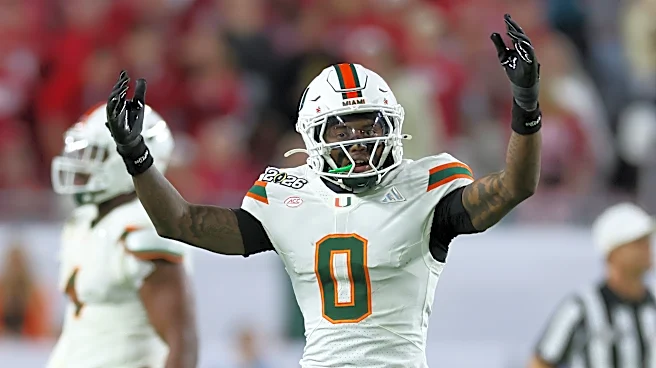
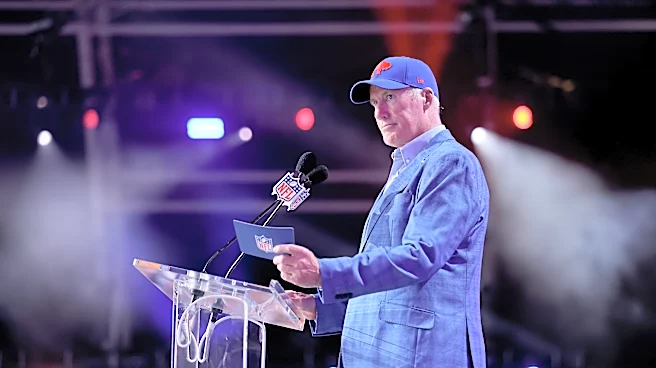
The Buffalo Bills approached the 2026 NFL Draft with a strategy that deviated from the norm, focusing on acquiring depth early and potential starters later. The team traded out of the first round, making their first selection at pick No. 35 with Clemson
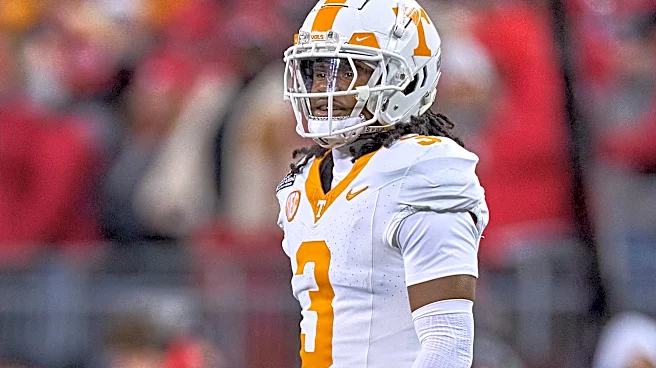
edge rusher T.J. Parker, followed by Ohio State cornerback Davison Igbinosun. Both players are considered depth additions rather than immediate starters. On Day 3, the Bills continued this trend by trading down and selecting Boston College offensive lineman Jude Bowry, UConn wide receiver Skyler Bell, TCU linebacker Kaleb Elarms-Orr, and safety Jalon Kilgore. These players are expected to compete for playing time and potentially fill starting roles in the future.
Why It's Important?
The Bills' draft strategy highlights a shift in team-building philosophy, emphasizing long-term depth over immediate impact. This approach could provide the team with a more robust roster capable of withstanding injuries and other challenges throughout the season. By focusing on depth, the Bills aim to create a competitive environment where players can develop and potentially step into starting roles as needed. This strategy may influence other NFL teams to reconsider their draft approaches, especially in a league where depth is crucial for sustained success.
What's Next?
The newly drafted players will join the Bills for training camp, where they will compete for roster spots and playing time. The team's coaching staff will evaluate their performance and determine how best to integrate them into the existing roster. The Bills' unconventional draft strategy will be closely watched by analysts and fans to see if it translates into on-field success. Additionally, the team's approach may prompt discussions among other NFL franchises about the value of prioritizing depth in the draft.