




What's Happening?
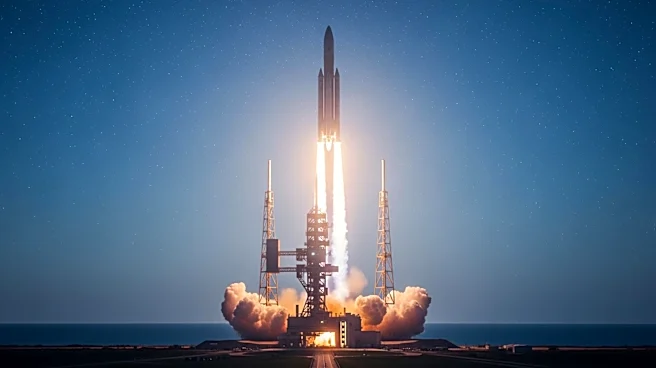
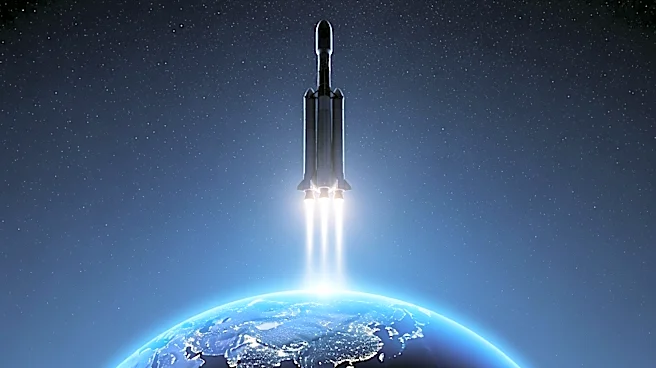
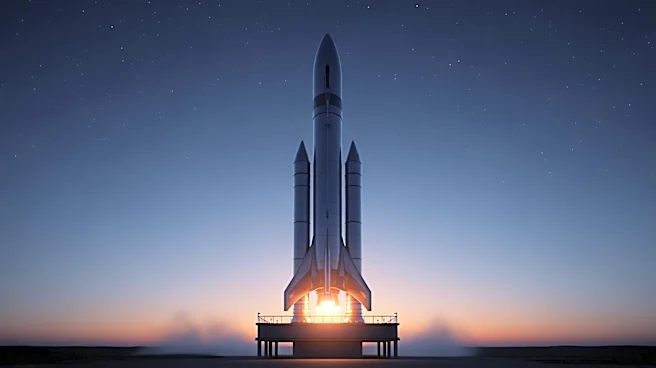
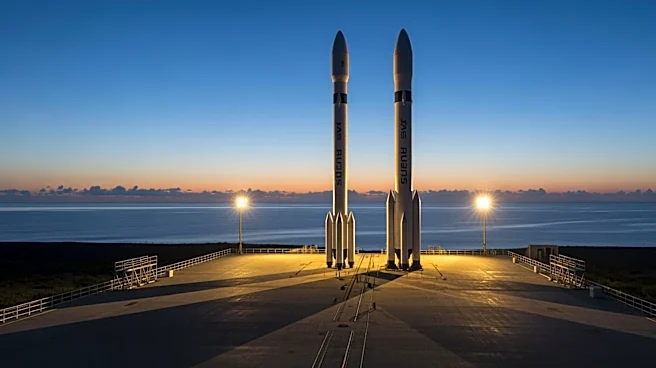
SpaceX's Falcon Heavy rocket successfully launched the ViaSat-3 F3 satellite into a geosynchronous transfer orbit. The launch took place from Launch Complex 39A, marking the 12th flight of the Falcon Heavy since 2018. The rocket's side boosters, B1072
and B1075, were recovered at Cape Canaveral Space Force Station, while the center core was not recovered. The ViaSat-3 F3 satellite is the third and final member of its constellation, designed to provide high-capacity internet coverage over the Asia-Pacific region. The satellite will undergo a two-month orbit-raising period before reaching its operational position.
Why It's Important?
The successful deployment of the ViaSat-3 F3 satellite represents a significant advancement in global internet connectivity, particularly in the Asia-Pacific region. The satellite's high capacity and flexible beam allocation capabilities are expected to enhance internet services for airline customers and other users in the region. This launch also underscores SpaceX's growing role in commercial satellite deployment, showcasing the capabilities of the Falcon Heavy rocket. The mission highlights the increasing demand for satellite-based internet services and the technological advancements that enable more efficient and flexible satellite operations.
What's Next?
Following the satellite's deployment, it will undergo a period of orbit raising to reach its designated position. Once operational, the ViaSat-3 F3 satellite will begin providing internet services, potentially transforming connectivity in underserved areas. The success of this mission may lead to further collaborations between SpaceX and satellite operators, as well as continued innovation in satellite technology. As the demand for global internet coverage grows, similar satellite launches are likely to become more frequent, driving advancements in satellite design and deployment strategies.