

What's Happening?
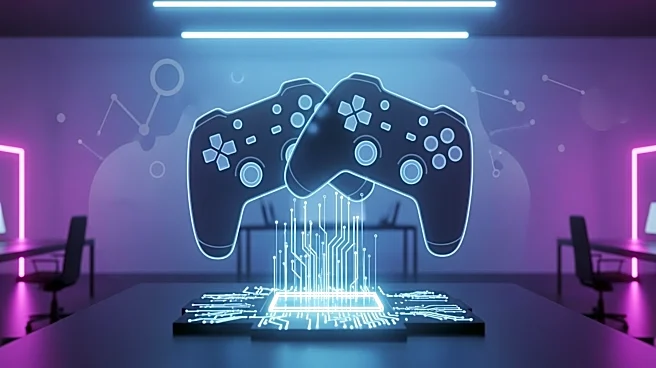
Five independent game studios, including Sad Cat Studios and Unfrozen, have formed a cooperative called 'Nova Assembly' to support each other in game development and marketing. The studios aim to create a co-owned publishing label to mitigate layoffs
and uncertainties in the gaming industry. Nova Assembly will allow these studios to share resources, expertise, and technology without compromising their creative independence. Denis Federov, founder of Unfrozen, will serve as CEO, while Ilya Yanovich from Weappy will be the Creative Director. The cooperative seeks to reinforce human elements in decision-making and provide mutual support among the studios.
Why It's Important?
The formation of Nova Assembly is significant as it addresses the challenges faced by independent game developers, such as financial instability and reliance on external publishers. By pooling resources and expertise, these studios can reduce costs and risks associated with game development and publishing. This cooperative model promotes creative freedom and innovation, potentially leading to more diverse and ambitious gaming projects. It also highlights a shift towards collaborative efforts in the industry, emphasizing the importance of human interaction and support in an increasingly algorithm-driven market.
What's Next?
Nova Assembly plans to establish its own publishing arm, allowing the studios to control how their games are marketed and released. This move could lead to more direct communication with audiences and gaming platforms, enhancing the studios' ability to adapt to market demands. The cooperative's success may inspire other independent developers to adopt similar models, fostering a more collaborative and resilient gaming industry. Upcoming releases from the studios, such as 'Replaced' and 'Heroes of Might & Magic: Olden Era,' will test the effectiveness of this cooperative approach.
Beyond the Headlines
The creation of Nova Assembly reflects broader trends in the gaming industry, where developers seek to balance creative independence with financial stability. This cooperative model may influence how games are developed and marketed, potentially leading to more innovative and diverse gaming experiences. It also raises questions about the future of traditional publishing models and the role of human collaboration in an industry increasingly dominated by technology and algorithms.