





What's Happening?
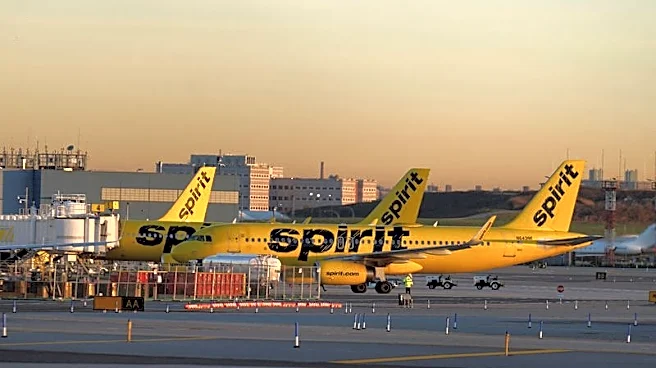
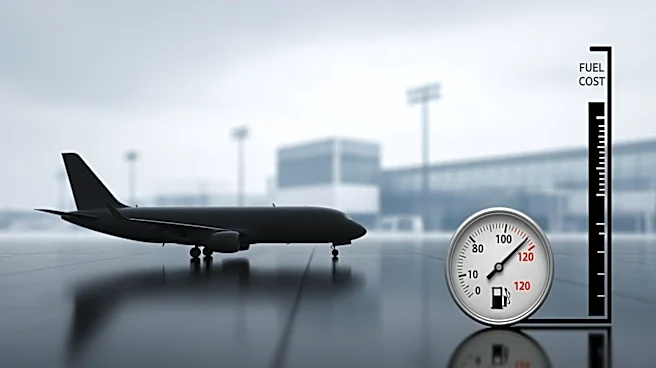
Spirit Airlines, a major ultra low-cost carrier in the U.S., is facing significant financial challenges, having filed for bankruptcy twice since late 2024. The airline's struggles are exacerbated by rising jet fuel costs due to the ongoing conflict in the Middle
East. Despite plans to emerge from bankruptcy protections by summer, experts suggest that the increasing fuel prices could jeopardize these efforts. U.S. Transportation Secretary Sean Duffy has announced that he is reviewing the situation at the request of President Trump. Spirit Airlines, which holds a 3.4% share of the domestic market, has been a key player in offering low-cost travel options, influencing major airlines to provide similar budget-friendly fares. However, the potential closure of Spirit could lead to higher fares as competition in the ultra low-cost segment diminishes.
Why It's Important?
The potential liquidation of Spirit Airlines could have significant implications for the U.S. airline industry and consumers. As an ultra low-cost carrier, Spirit has played a crucial role in keeping airfares competitive, particularly in markets like Fort Lauderdale, where it holds a substantial market share. The disappearance of Spirit could lead to increased fares as major airlines face less pressure to offer budget options. This would negatively impact consumers who rely on affordable travel options. Additionally, Spirit's closure could lead to a consolidation of market power among larger airlines, reducing consumer choice and potentially leading to higher prices across the board.
What's Next?
If Spirit Airlines fails to emerge from bankruptcy, the airline industry could see a shift in market dynamics. Major airlines might absorb Spirit's market share, particularly in regions where Spirit has a strong presence. This could lead to a reevaluation of pricing strategies by other ultra low-cost carriers like Frontier and Breeze. The Department of Transportation, under Secretary Duffy's guidance, may also consider regulatory measures to ensure competitive pricing and prevent monopolistic practices in the industry. The outcome of Spirit's financial struggles will likely influence future policy decisions regarding airline mergers and market competition.