

What's Happening?
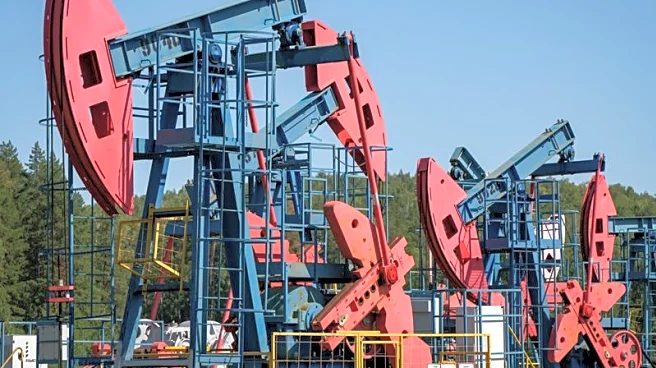
Oil prices have reached a six-month high as the U.S. and Iran prepare for a third round of nuclear talks. This increase is also influenced by economic uncertainty following the U.S. Supreme Court's decision to strike down import tariffs. Brent crude futures
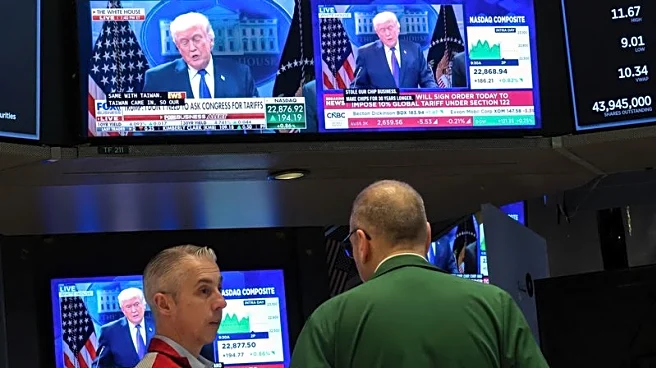
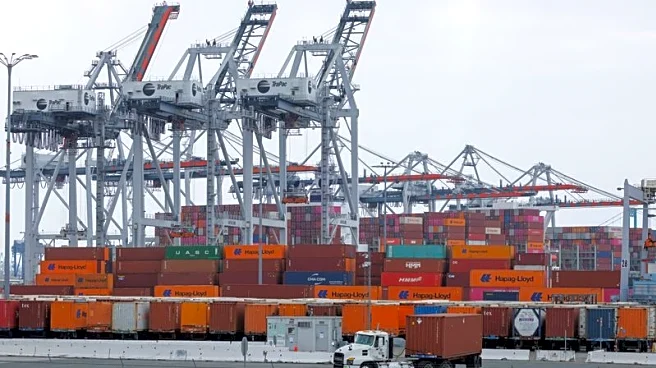
rose to $72.38 a barrel, while U.S. West Texas Intermediate crude increased to $67.17. Concerns over potential military conflict between the U.S. and Iran have driven Brent prices up by more than 5% last week. The U.S. Customs and Border Protection agency has temporarily halted tariff collections, but President Trump plans to raise tariffs on imports from all countries.
Why It's Important?
The rise in oil prices underscores the impact of geopolitical tensions and economic policies on global energy markets. The potential for conflict between the U.S. and Iran, along with tariff uncertainties, has created volatility in oil prices, affecting the energy sector and broader economic conditions. These developments have implications for international trade, market stability, and economic growth. The U.S. tariff policy could influence global supply chains and trade relations, while the outcome of the Iran nuclear talks could affect regional stability and oil supply.
What's Next?
The upcoming nuclear talks between the U.S. and Iran are crucial for determining future oil market trends. Iran's willingness to negotiate on its nuclear program in exchange for sanctions relief could lead to a reduction in tensions and stabilize oil prices. However, continued uncertainty regarding U.S. tariff policies and geopolitical tensions could maintain market volatility. Stakeholders will be closely monitoring these developments to assess their impact on global economic conditions and energy markets.