






What's Happening?
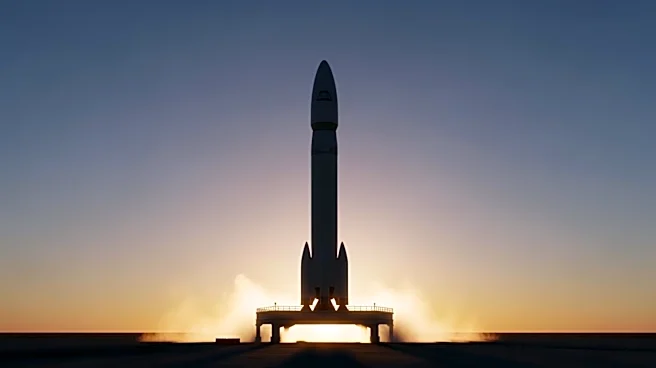
SpaceX is preparing to launch the tallest and most powerful rocket in history, the Starship V3, as part of NASA's Artemis program. The launch, scheduled for May 19, will test the rocket's capabilities for future lunar missions. The Starship V3 features
significant upgrades, including larger grid fins and enhanced Raptor engines. The rocket's height surpasses previous models, making it a key component of NASA's plans to return humans to the moon by 2028. The test flight will be closely monitored by NASA, as the Starship is integral to the Human Lander System for the Artemis program.
Why It's Important?
The successful launch of the Starship V3 is critical for NASA's Artemis program, which aims to establish a sustainable human presence on the moon. The rocket's capabilities could revolutionize space travel, enabling more efficient and cost-effective missions. The Starship's design improvements are essential for meeting the program's ambitious goals, including lunar landings and potential Mars missions. The test flight will provide valuable data to refine the rocket's design and ensure its reliability for future missions.
What's Next?
SpaceX will analyze the test flight results to make necessary adjustments to the Starship's design. The company plans to conduct additional test flights to validate the rocket's capabilities and prepare for human lunar landings. NASA will continue to collaborate with SpaceX to integrate the Starship into the Artemis program, potentially accelerating the timeline for lunar exploration. The success of the Starship V3 could pave the way for more ambitious space missions, including Mars exploration and commercial space travel.