








What's Happening?
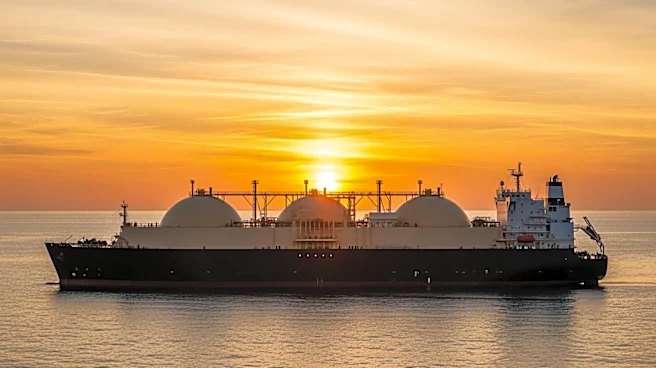
The Society for Gas as a Marine Fuel (SGMF) has released its latest Life Cycle Assessment (LCA) on the use of liquefied natural gas (LNG) as a marine fuel, revealing significant reductions in greenhouse gas (GHG) emissions. The assessment indicates that
using LNG can lead to up to a 29% reduction in tank-to-wake GHG emissions compared to marine gas oil (MGO) 0.1%. This marks an improvement of up to 13% from the previous assessment conducted in 2022. The study also highlights a 25% reduction in overall well-to-wake GHG emissions, supported by a 9% reduction in well-to-tank emissions since the first LNG LCA study in 2019. SGMF's findings are based on a variety of engine types and reflect industry progress in reducing emissions with LNG. The organization emphasizes the importance of independent, fact-based data to guide shipowners in making informed decisions about future fuel pathways.
Why It's Important?
The findings from SGMF's LCA are crucial for the maritime industry as it seeks to reduce its carbon footprint and comply with international environmental regulations. The significant reduction in GHG emissions when using LNG as a marine fuel supports the industry's transition towards more sustainable energy sources. This shift is essential for meeting global climate targets and reducing the environmental impact of shipping, which is a major contributor to global emissions. The study provides shipowners and operators with critical data to evaluate their decarbonization strategies and make informed decisions about fuel choices. As the industry moves towards cleaner fuels, such assessments help identify gaps and opportunities for further emissions reductions, ultimately contributing to the sustainable decarbonization of maritime transport.
What's Next?
SGMF plans to continue its research and publish additional LCAs on alternative marine fuels, including methanol and ammonia. The organization aims to release its first LCA on methanol in mid-2026, following its previous study on ammonia in 2024. These forthcoming assessments will provide a comprehensive view of the environmental impacts of various fuel options, helping the maritime industry to identify areas for improvement and increase the adoption of cleaner fuels. The ongoing research and publication of LCAs will support the industry's efforts to achieve significant emissions reductions and align with global sustainability goals.