






What's Happening?
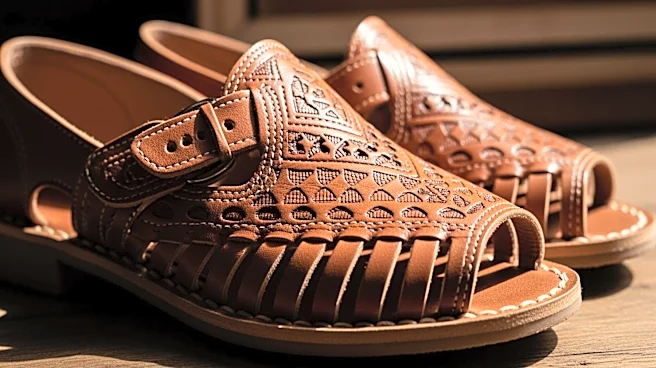
Prada has introduced a new collection of sandals inspired by traditional Indian Kolhapuri chappals, launching them in 40 selected stores globally and online. These sandals are crafted by artisans from Maharashtra and Karnataka, regions known for this
traditional footwear. The initiative is part of Prada's 'Made in India x Inspired by Kolhapuri Chappals' project, which aims to preserve and promote the cultural heritage of these sandals. In collaboration with Indian government organizations LIDCOM and LIDKAR, Prada has also established a training program for artisans. This program, fully funded by Prada, will run over three years and aims to enhance the design and technical skills of 180 artisans, ensuring the craft's relevance in modern markets.
Why It's Important?
This initiative by Prada highlights the growing trend of luxury brands engaging with traditional crafts to create unique products while supporting local artisans. By investing in training programs, Prada is not only preserving cultural heritage but also providing economic opportunities for artisans in India. This move could set a precedent for other luxury brands to follow, potentially leading to a broader recognition and appreciation of traditional crafts in the global market. The collaboration also underscores the importance of sustainable practices in the fashion industry, as it promotes the use of traditional methods and materials.
What's Next?
The training program is set to begin this summer, with applications opening soon for artisans aged 18 to 45. Selected participants will have the opportunity to further their training at the Prada Group Academy in Italy. This initiative may lead to increased global visibility for Indian craftsmanship and could inspire similar collaborations between luxury brands and traditional artisans worldwide. The success of this program could influence future business strategies within the fashion industry, emphasizing the value of cultural heritage and sustainable practices.
Beyond the Headlines
Prada's project not only supports economic development but also fosters cultural exchange and dialogue. By integrating traditional craftsmanship with modern design, the initiative could redefine luxury fashion, positioning traditional crafts as a new form of luxury. This approach may encourage consumers to value the cultural and historical significance of products, potentially shifting consumer behavior towards more sustainable and ethically produced goods.