



What's Happening?
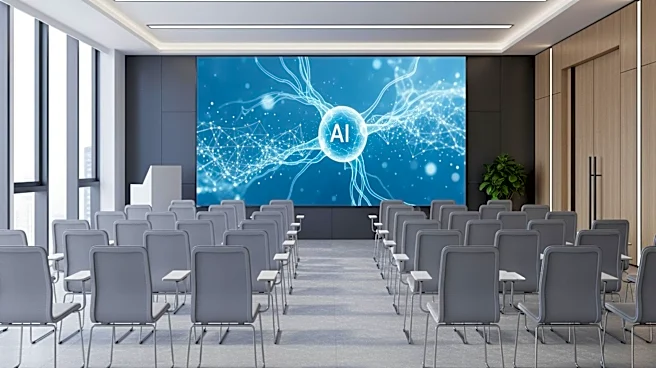
Manufacturers are increasingly integrating AI into their operations, focusing on training their workforce to effectively utilize these technologies. Companies like Siemens are investing in large-scale training programs to prepare hundreds of thousands
of workers for AI-powered roles. The shift from pilot programs to full-scale AI integration has highlighted the need for structured, role-specific training. Many manufacturers are partnering with technical colleges, workforce programs, and vendors to close skills gaps. The emphasis is on building AI literacy, system-specific skills, and decision-making discipline among employees to ensure successful adoption and execution of AI systems.
Why It's Important?
The rapid adoption of AI in manufacturing is transforming the industry, raising the standard for skilled work. As AI systems become integral to operations, the workforce must be equipped to interpret system outputs, diagnose issues, and make informed decisions based on real-time data. Proper training is crucial to prevent underutilization of AI systems and ensure that alerts and predictive insights are effectively acted upon. Companies that prioritize training as part of their AI strategy are likely to see faster and more successful integration, leading to improved operational efficiency and competitive advantage.
What's Next?
Manufacturers are expected to continue expanding AI training programs, focusing on specific applications like predictive maintenance and quality inspection. Successful adoption of AI in one area can pave the way for broader implementation across facilities. As AI becomes more embedded in daily operations, ongoing training and refreshers will be necessary to keep the workforce adept at handling evolving technologies. The industry may see increased collaboration with educational institutions and vendors to develop tailored training solutions that align with real-world applications.