







What's Happening?
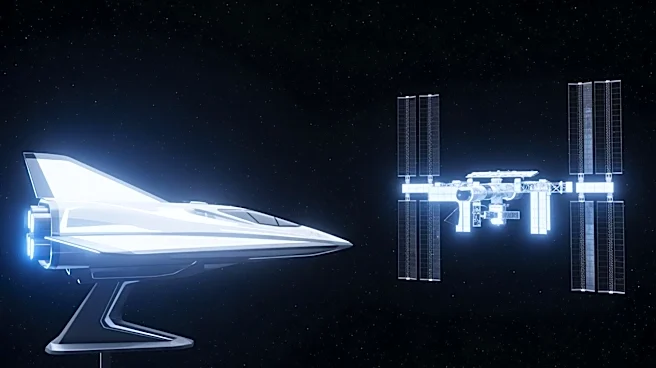
Voyager Technologies has been awarded a contract by NASA to conduct a private astronaut mission to the International Space Station (ISS), scheduled for no earlier than 2028. This marks Voyager's first private astronaut mission, making it the third company
to enter the space tourism sector alongside Axiom Space and Vast. The mission is part of NASA's broader strategy to develop commercial space stations as successors to the ISS. Voyager's CEO, Dylan Taylor, emphasized the significance of this partnership with NASA, highlighting the potential for low-Earth orbit infrastructure to serve as a launchpad for future deep space exploration.
Why It's Important?
The entry of Voyager Technologies into the private astronaut mission market signifies a growing competition in the commercial space sector. This development is crucial as it aligns with NASA's efforts to transition from government-operated to commercially-operated space stations, fostering innovation and reducing costs. The involvement of multiple companies in this sector could accelerate advancements in space technology and infrastructure, potentially leading to more frequent and affordable access to space. This shift could have significant implications for industries reliant on space-based technologies, such as telecommunications and Earth observation.
What's Next?
As Voyager prepares for its mission, the company will likely focus on developing the necessary infrastructure and partnerships to ensure a successful launch. The broader commercial space industry will be watching closely to see how Voyager's entry impacts the competitive landscape. NASA's proposed changes to its procurement policy, which include supporting multiple free-flying stations, may also influence future missions and partnerships. Stakeholders in the space industry, including other commercial space companies and national space agencies, will need to adapt to these evolving dynamics.