



What's Happening?
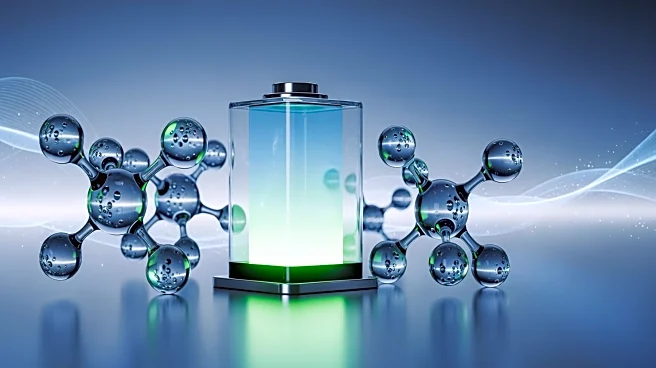
Chinese researchers have developed a new hydrofluorocarbon-based electrolyte that significantly enhances the performance of lithium batteries. This innovative electrolyte can operate efficiently at room temperature and in extreme conditions, such as -70
degrees Celsius. The research, conducted by teams from Shanghai and Tianjin, indicates that batteries using this electrolyte have more than twice the energy density compared to those with conventional electrolytes. The findings, published in the journal Nature, suggest that this technology could break the existing power and energy density limitations of current battery technologies. Li Yong, a researcher at the Shanghai Institute of Space Power-Sources, highlighted that this advancement could increase the room temperature energy storage capacity of lithium batteries by two to three times.
Why It's Important?
This development is crucial for the electric vehicle (EV) industry, as it promises to extend the range of EVs significantly. By enhancing the energy density of lithium batteries, vehicles can travel longer distances on a single charge, addressing one of the major limitations of current EV technology. This could accelerate the adoption of electric vehicles, contributing to reduced carbon emissions and a shift towards more sustainable transportation solutions. Additionally, the ability of these batteries to function in extreme temperatures expands their applicability in various environments, including space missions, potentially revolutionizing energy storage solutions across multiple sectors.
What's Next?
The next steps involve further testing and potential commercialization of this electrolyte technology. If successful, it could lead to widespread adoption in the EV market and beyond. Stakeholders in the automotive and energy sectors may invest in this technology to enhance their product offerings. Regulatory bodies might also consider new standards and guidelines to accommodate these advanced batteries. The global push for cleaner energy solutions could see increased collaboration between international research institutions and companies to refine and implement this technology.
Beyond the Headlines
The introduction of this electrolyte could have broader implications for the energy storage industry. It may lead to innovations in other battery-dependent technologies, such as portable electronics and renewable energy storage systems. The environmental impact of producing and disposing of batteries could also be mitigated if these new batteries prove to be more efficient and longer-lasting. Furthermore, this advancement underscores the importance of international collaboration in scientific research, as breakthroughs in one region can have global benefits.