
What's Happening?
The ATP Board has announced the implementation of a new heat rule set to take effect in the 2026 season. This regulation is designed to align with the Women's Tennis Association (WTA) standards and aims
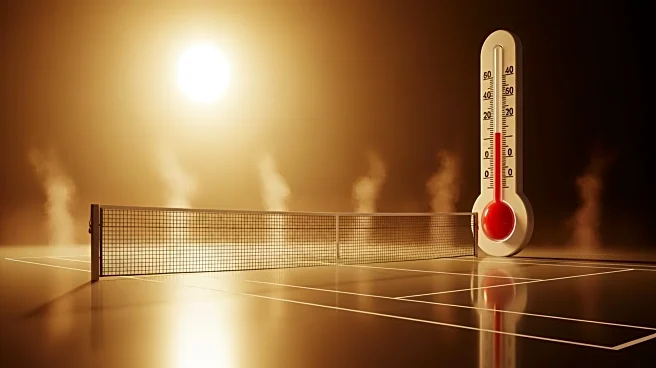
to enhance player safety during extreme weather conditions. The rule is based on the Wet Bulb Globe Temperature (WBGT) index, which measures heat stress in direct sunlight. Key provisions include a 10-minute cooling break that can be requested by either player when the WBGT reaches 30.1°C or higher during the first two sets of best-of-three singles matches. Additionally, play will be suspended if the WBGT exceeds 32.2°C. During the cooling break, players are allowed to hydrate, change clothing, shower, and receive coaching under the supervision of ATP medical staff.
Why It's Important?
The introduction of this heat rule is significant as it prioritizes the health and safety of players, which has been a growing concern in professional tennis. Extreme heat can lead to serious health issues such as heatstroke and dehydration, affecting not only player performance but also their long-term health. By setting clear thresholds for cooling measures and play suspension, the ATP is taking proactive steps to mitigate these risks. This move is also likely to improve conditions for spectators, officials, and tournament staff, ensuring a safer and more enjoyable experience for all involved. The alignment with WTA standards reflects a broader industry trend towards unified safety protocols in tennis.
What's Next?
As the 2026 season approaches, the ATP will likely focus on educating players, coaches, and tournament organizers about the new heat rule and its implementation. There may be discussions on how to integrate these measures into existing tournament schedules and logistics. Additionally, the ATP might collaborate with medical experts to refine the rule further based on feedback and evolving scientific understanding of heat-related health risks. Stakeholders, including players and tournament directors, will need to adapt to these changes, potentially influencing training regimens and match strategies.