


What's Happening?
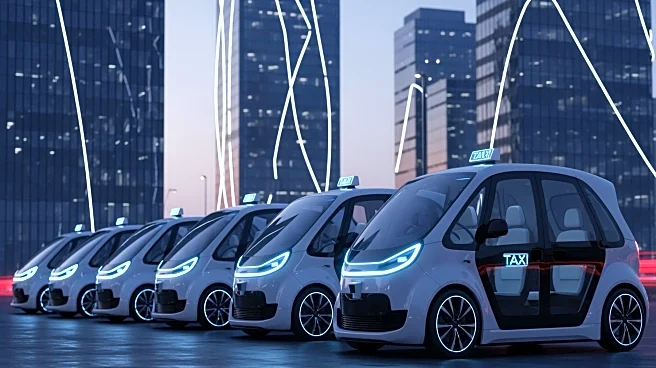
Uber has announced a significant investment of $1.25 billion in Rivian, an electric vehicle manufacturer, to facilitate the deployment of up to 50,000 self-driving taxis. This initiative is part of Uber's broader strategy to expand its presence in the autonomous
vehicle market. The initial rollout of these robotaxis is expected to occur in San Francisco and Miami by 2028. The investment is contingent upon Rivian achieving specific autonomy milestones, with an initial commitment of $300 million subject to regulatory approval. The partnership aims to expand the service to as many as 25 cities across the U.S., Canada, and Europe by 2031.
Why It's Important?
This partnership between Uber and Rivian marks a significant step in the evolution of autonomous transportation. By investing heavily in Rivian, Uber is positioning itself as a leader in the burgeoning market of self-driving vehicles. The deployment of robotaxis could revolutionize urban transportation, offering a more efficient and potentially safer alternative to traditional ride-hailing services. This move could also accelerate the adoption of electric vehicles, contributing to environmental sustainability efforts. The success of this initiative could influence other companies to invest in similar technologies, potentially reshaping the future of urban mobility.
What's Next?
The next steps involve regulatory approvals and the achievement of technological milestones by Rivian. If successful, the initial deployment in San Francisco and Miami will serve as a testbed for further expansion. Uber's investment strategy will likely focus on ensuring the reliability and safety of these autonomous vehicles. The broader rollout to additional cities will depend on the outcomes of these initial deployments. Stakeholders, including city governments and regulatory bodies, will play a crucial role in facilitating or hindering the expansion of this autonomous taxi service.