






What's Happening?
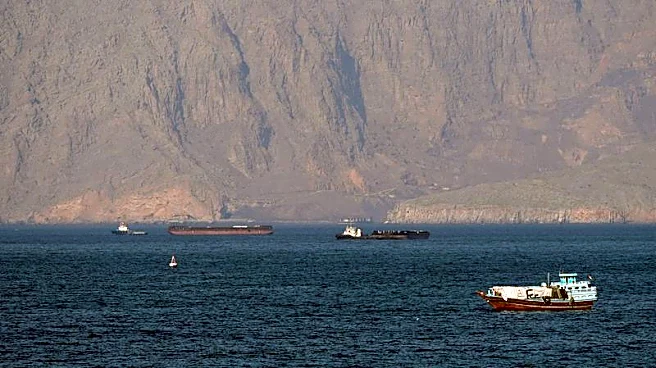
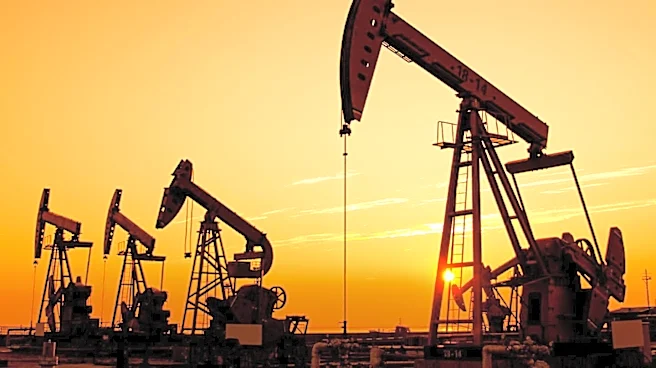
Recent hostilities between U.S. and Iranian forces have led to a significant increase in oil prices, which in turn has affected the gold and silver markets. The conflict saw U.S. forces disabling an Iranian tanker and Iran launching missiles at U.S. bases
in Bahrain and Kuwait. This escalation has caused oil prices to rise sharply, with Nymex WTI crude oil trading around $95.78 a barrel and Brent crude near $97.89. The increase in oil prices has contributed to a firmer U.S. dollar and revived inflation concerns, which are weighing on non-yielding metals like gold and silver. Spot gold prices have decreased by 0.81% to approximately $4,451.70 an ounce, while spot silver has fallen by 1.37% to about $74.105. The broader market impact includes mixed U.S. equity futures and a decline in Bitcoin prices.
Why It's Important?
The surge in oil prices due to U.S.-Iran tensions has significant implications for global markets. Higher oil prices can lead to increased inflationary pressures, affecting consumer prices and economic stability. The firmer U.S. dollar, driven by rising oil prices, can impact international trade and investment flows. For the precious metals market, the conflict introduces a complex dynamic where safe-haven demand for gold is countered by inflationary pressures and a stronger dollar. This situation highlights the interconnectedness of geopolitical events and financial markets, with potential ripple effects on energy shares, fuel-sensitive equities, and shipping volatility.
What's Next?
The ongoing conflict between the U.S. and Iran could lead to further volatility in oil and precious metals markets. If tensions escalate, oil prices may continue to rise, exacerbating inflation concerns and impacting global economic conditions. Market participants will closely monitor developments in the region, including any diplomatic efforts to de-escalate the situation. Additionally, upcoming U.S. economic data releases, such as the May jobs report and Federal Reserve communications, will be critical in shaping market expectations and responses.