





What's Happening?
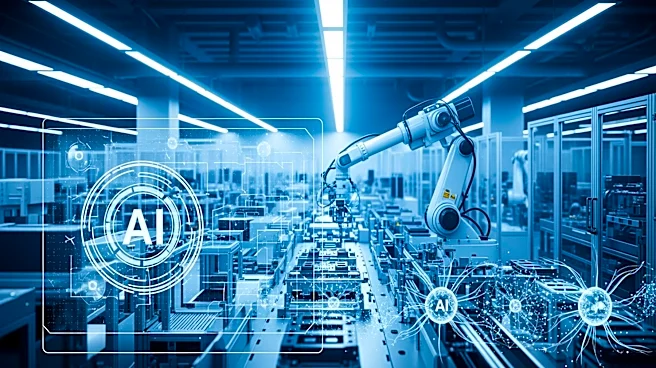
General Dynamics Ordnance and Tactical Systems (GD–OTS) has announced a partnership with Deterrence to incorporate artificial intelligence (AI) into its manufacturing operations. This collaboration aims to enhance production efficiency, operational coordination,
and manufacturing throughput by leveraging Deterrence's expertise in facility optimization, intelligent automation, and factory integration. The initiative will initially be implemented at the GD–OTS facility in Mesquite, Texas, with plans to expand to other locations. The integration will connect production equipment, operational workflows, and quality systems, creating a more efficient and visible manufacturing environment. This move is part of GD–OTS's strategy to improve its manufacturing capabilities by layering AI software onto existing infrastructure.
Why It's Important?
The integration of AI into manufacturing processes is significant for the defense industry as it promises to enhance production capabilities and reduce operational downtime. For GD–OTS, this partnership represents a strategic move to maintain competitiveness in the defense sector by adopting advanced technologies. The use of AI can lead to more efficient production lines, potentially lowering costs and increasing output, which is crucial for meeting the demands of critical defense programs. This development also highlights the growing trend of incorporating AI in industrial operations, which could set a precedent for other companies in the sector to follow suit.
What's Next?
The successful implementation of AI at the Mesquite facility could serve as a model for other GD–OTS locations, potentially leading to widespread adoption across the company's operations. This could result in significant improvements in production efficiency and operational coordination. Additionally, the partnership may prompt other defense contractors to explore similar collaborations, further integrating AI into the defense manufacturing landscape. Stakeholders, including government agencies and defense contractors, will likely monitor the outcomes closely to assess the benefits and challenges of such technological integrations.