





What's Happening?
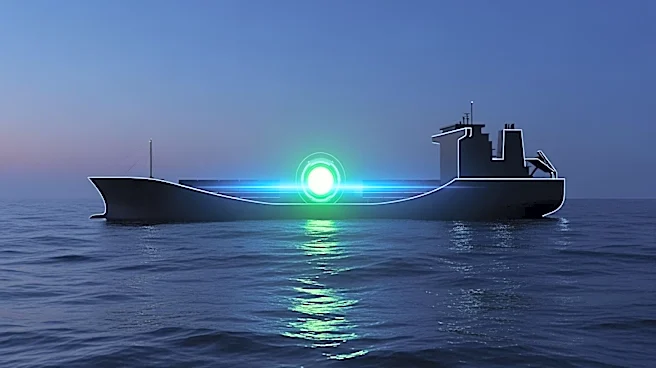
The American Bureau of Shipping (ABS) has granted an Approval in Principle (AIP) for the integration of a nuclear reactor into a cargo vessel propulsion system. This innovative design is a collaborative effort by the Massachusetts Institute of Technology
(MIT), HD Korea Shipbuilding & Offshore Engineering (HD KSOE), and Capital Maritime Group. The design utilizes a special synthetic fluid to transfer heat from the reactor core, focusing on micro-scale thermal outputs of 10 to 20 megawatts. The reactor's near-atmospheric operating pressure allows for thinner, lighter reactor vessels, facilitating modular construction and easier transport. This AIP is the first to be granted through the MIT Maritime Consortium, which includes ABS, HD KSOE, and Capital Maritime Group as founding members. The consortium aims to advance maritime technologies, including alternative fuels and new nuclear technologies.
Why It's Important?
This development marks a significant step forward in the maritime industry's pursuit of innovative propulsion systems. By integrating nuclear technology into vessel design, the consortium aims to enhance efficiency and reduce emissions, addressing environmental concerns associated with traditional marine fuels. The approval by ABS signifies confidence in the safety and feasibility of this technology, potentially setting a precedent for future maritime designs. The successful implementation of such systems could lead to a paradigm shift in how cargo vessels are powered, offering a sustainable alternative to fossil fuels and contributing to global efforts to reduce carbon footprints in the shipping industry.
What's Next?
Following the AIP, the next steps involve further testing and validation of the reactor design to ensure compliance with safety and operational standards. The consortium will likely focus on refining the technology and exploring commercial applications. Stakeholders in the maritime industry, including shipbuilders and operators, may closely monitor these developments, considering potential investments in nuclear-powered vessels. Regulatory bodies may also begin to establish guidelines and frameworks to support the safe deployment of nuclear technology in maritime contexts.