







What's Happening?
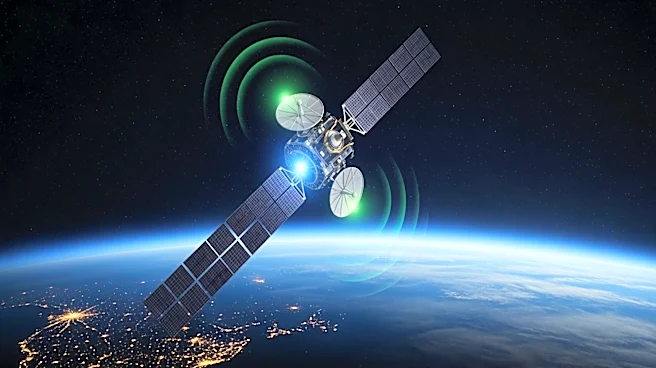
Aetherflux, now rebranded as Cowboy Space Corporation, has successfully raised $275 million in a Series B funding round to expand its space-solar-power business. The company, led by CEO Baiju Bhatt, is shifting its focus to include orbital data centers
and rockets. This rebranding reflects the company's ambitious goals, encapsulated in its new mission statement: 'Powering humanity from the high frontier.' Previously, Aetherflux aimed to build a small-satellite constellation to collect solar power in space and deliver it to Earth via infrared lasers. The new strategy involves designing a launch vehicle that integrates with an upper-stage data center, providing dedicated space access amid strained launch capacities. The funding round was led by Index Ventures, with contributions from Breakthrough Energy Ventures, Construct Capital, and IVP, valuing the company at $2 billion.
Why It's Important?
The rebranding and funding of Cowboy Space Corporation signify a significant shift in the space industry, highlighting the growing interest in space-based solar power and in-space computing. This development could have substantial implications for energy and data management sectors, potentially reducing reliance on Earth-based resources and infrastructure. The integration of launch vehicles with data centers could streamline operations and reduce costs, offering a competitive edge in the burgeoning space economy. Investors' confidence, as demonstrated by the substantial funding, underscores the potential profitability and innovation in space technology. This move could also influence policy and regulatory frameworks as space becomes an increasingly critical domain for technological advancement and economic growth.
What's Next?
Cowboy Space Corporation plans to launch its first satellite within the year, aiming to demonstrate its capability to beam power from space to Earth. The first rocket launch is anticipated no earlier than the end of 2028. As the company progresses, it may face challenges related to regulatory approvals, technological hurdles, and competition from other space ventures. Stakeholders, including investors and policymakers, will likely monitor the company's advancements closely, as successful implementation could set new standards in space technology and energy solutions. The company's progress could also prompt further investments and collaborations in the space sector, driving innovation and economic opportunities.