





What's Happening?
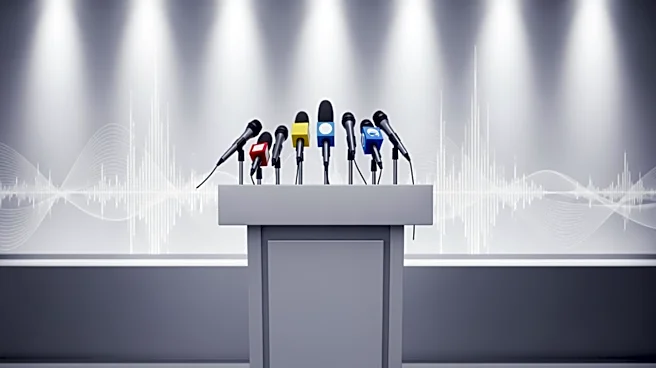
The 2026 FIFA World Cup, hosted by the United States, Canada, and Mexico, has faced criticism for its language policy during press conferences. Initially, FIFA allowed questions in only three languages per conference: English and two others chosen by the national
teams. This policy led to backlash when Spanish-speaking journalists were prevented from asking questions in Spanish, despite Mexico being a host nation. The issue gained attention after incidents involving players like Morocco's Achraf Hakimi and the Netherlands' Frenkie de Jong, who both speak Spanish. In response to the criticism, FIFA announced it would add Spanish as a fourth language option for all press conferences.
Why It's Important?
The decision to include Spanish as a standard language in press conferences is significant for several reasons. It acknowledges the cultural and linguistic diversity of the host nations, particularly Mexico, and addresses concerns about inclusivity. This change could enhance the experience for Spanish-speaking media and fans, ensuring better representation and communication. It also highlights the importance of accommodating diverse audiences in global events, setting a precedent for future tournaments. The move may improve FIFA's image, showing responsiveness to public feedback and a commitment to inclusivity.
What's Next?
With the new language policy in place, FIFA will likely monitor its implementation to ensure smooth operations during press conferences. The organization may also consider further adjustments based on feedback from media and participants. This change could prompt other international sporting events to reevaluate their language policies to better accommodate diverse audiences. Additionally, FIFA's decision may influence how future World Cups are organized, particularly in terms of cultural and linguistic inclusivity.