




What's Happening?
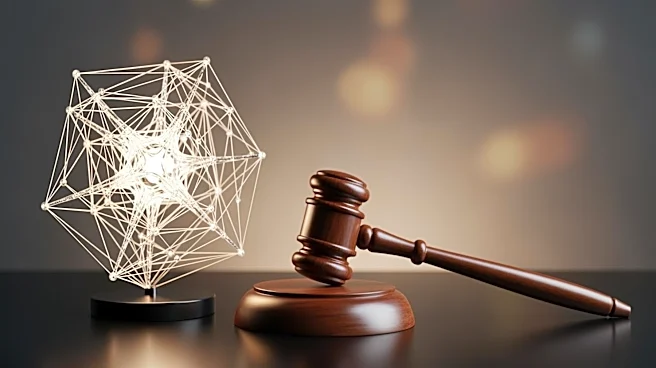
A recent court ruling has intensified the debate over the role of generative AI in the creative industries. The Court of Appeals for the District of Columbia ruled in Thaler v. Perlmutter that works generated autonomously by AI cannot be protected by copyright,
as copyright requires a human author. This decision, which the Supreme Court declined to review, raises questions about the extent to which AI-generated content can be incorporated into works before they become uncopyrightable. The ruling has significant implications for industries like film, television, music, and book publishing, which rely heavily on copyright protection to monetize intellectual property. As AI-generated content becomes more prevalent, the challenge lies in determining how much human involvement is necessary for a work to qualify for copyright protection.
Why It's Important?
The ruling has major economic implications for the creative industries, which depend on copyright protection to license and monetize content. Without copyright, the financial model that supports these industries could collapse, as anyone could freely copy and distribute works. This creates a strong incentive for companies to continue employing human creators, despite the cost savings AI could offer. The decision also highlights the need for clearer guidelines on the use of AI in creative processes, as the line between human and AI-generated content becomes increasingly blurred. The outcome of this legal debate will determine whether human creators can maintain their roles in the industry or be replaced by AI, affecting the quality and authenticity of creative works.
What's Next?
The future of AI in the creative industries will likely involve further legal battles and regulatory developments. Courts and regulators may need to establish clearer criteria for what constitutes sufficient human involvement in AI-generated works to qualify for copyright protection. Additionally, there may be increased pressure to impose harsher penalties for misrepresenting AI involvement in copyright registrations. As the industry navigates these challenges, the balance between innovation and the protection of human creators' rights will be crucial in shaping the future landscape of creative labor.
Beyond the Headlines
The ethical and cultural implications of AI in creative industries are profound. As AI-generated content becomes harder to distinguish from human-authored work, there is a risk of devaluing human creativity and undermining the authenticity of artistic expression. The public's skepticism towards AI-generated content, as evidenced by backlash against certain AI tools, underscores the importance of maintaining human involvement in creative processes. This debate also raises questions about the role of technology in society and the need to preserve human agency in the face of rapid technological advancement.