







What's Happening?
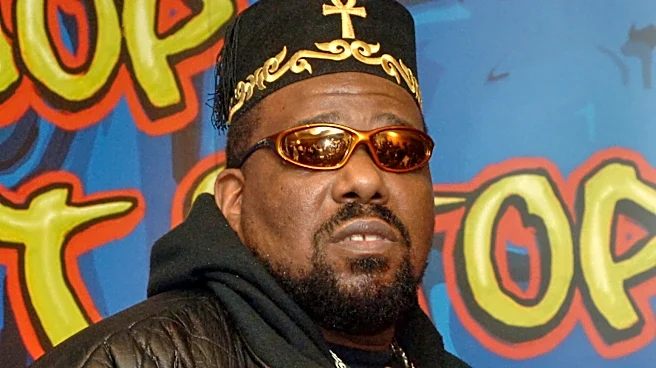
Afrika Bambaataa, a pioneering figure in hip-hop, has died at the age of 68 due to prostate cancer. Known for his influential role in the global spread of hip-hop culture, Bambaataa was a DJ, rapper, producer, and activist. He co-founded the Universal
Zulu Nation in the late 1970s, which became a significant cultural movement. Bambaataa's 1982 hit 'Planet Rock' was pivotal in popularizing electro-rap and dance-pop. Despite his contributions, his legacy is marred by allegations of child sexual abuse, which surfaced in 2016 and led to a civil lawsuit he lost in 2025. The hip-hop community remains divided over his legacy, with some defending his contributions to the culture while others distance themselves due to the allegations.
Why It's Important?
Afrika Bambaataa's death marks the end of an era for hip-hop, a genre that has become a dominant cultural force globally. His work in the early days of hip-hop helped shape the genre's identity and spread its influence worldwide. However, the allegations against him highlight the complex nature of his legacy, raising questions about how to reconcile his contributions with the serious accusations he faced. This situation reflects broader societal challenges in addressing the legacies of influential figures who have been accused of misconduct. The hip-hop community's response to Bambaataa's legacy could influence how similar cases are handled in the future, impacting public discourse on accountability and cultural contributions.
What's Next?
The hip-hop community and cultural institutions may continue to grapple with how to honor Bambaataa's contributions while acknowledging the allegations against him. The Universal Zulu Nation and other organizations he was associated with might face scrutiny regarding their handling of the allegations. Additionally, discussions about Bambaataa's legacy could influence ongoing efforts to document and preserve hip-hop history, such as the development of the Hip-Hop Museum in the Bronx. The community's response could set precedents for how similar cases are addressed in the future, potentially affecting public perceptions of accountability and legacy in the arts.
Beyond the Headlines
Bambaataa's story underscores the ethical and cultural challenges of separating an artist's work from their personal actions. It raises questions about how society should remember influential figures who have been accused of serious misconduct. This case may prompt broader discussions about the responsibilities of cultural institutions and communities in addressing such legacies. The ongoing dialogue could influence how future generations understand and engage with hip-hop culture, potentially leading to shifts in how cultural contributions are evaluated in light of personal conduct.