





What's Happening?
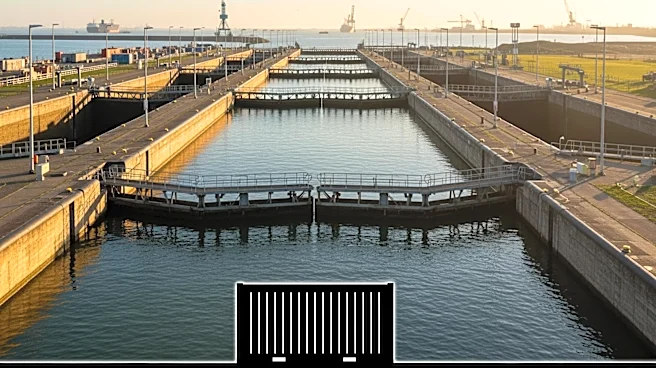
Businesses are spending up to $4 million to secure passage through the Panama Canal as tensions in the Strait of Hormuz disrupt global trade. The Panama Canal Authority reports a surge in demand for crossing slots, with companies opting for the canal
to avoid the geopolitical risks associated with the Strait of Hormuz. The auction system for canal passage has seen prices soar, with some companies paying significant premiums to expedite their shipments. The canal, which typically handles about 6% of global trade, is experiencing increased traffic as businesses reroute shipments to avoid the volatile region.
Why It's Important?
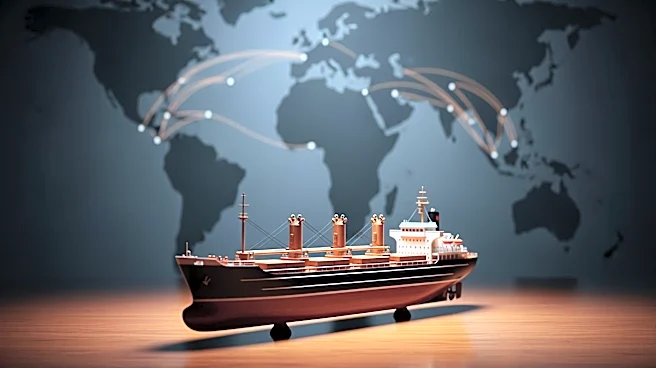
The shift in trade routes underscores the impact of geopolitical tensions on global supply chains. The increased use of the Panama Canal highlights its strategic importance as an alternative trade route, especially for goods traveling between Asia, Europe, and the Americas. The situation also reflects the broader economic implications of regional conflicts, as businesses incur higher costs to ensure the timely delivery of goods. The Panama Canal's ability to accommodate increased traffic is crucial for maintaining global trade flows, particularly as oil prices and shipping costs rise due to the ongoing conflict.
What's Next?
As tensions in the Strait of Hormuz persist, businesses may continue to rely on the Panama Canal, potentially leading to further increases in crossing fees. The Panama Canal Authority may need to manage the heightened demand and ensure efficient operations to accommodate the surge in traffic. Additionally, the geopolitical situation in the Middle East will likely remain a focal point for international trade and security discussions. Companies and governments will need to navigate the complexities of global trade routes and assess the long-term implications of shifting supply chains.