






What's Happening?
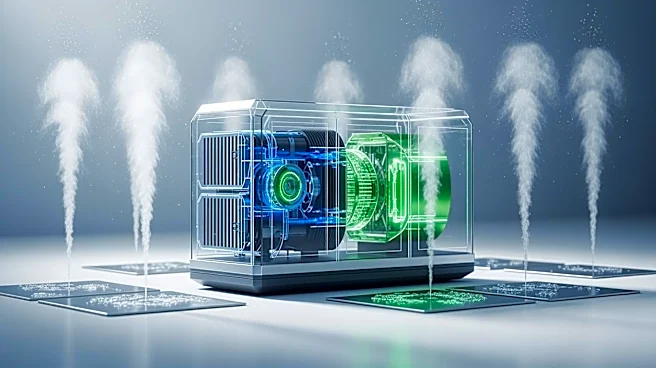
Researchers from several universities have developed a Moisture-Electric Generator (MEG) that converts ambient moisture into electricity. Made from gelatin, table salt, and activated carbon, the device generates a continuous electrical output by absorbing
moisture. This biodegradable generator offers a sustainable alternative to conventional batteries, particularly for use in humid environments. The MEG can power small devices and has potential applications in wearable technology and environmental sensors.
Why It's Important?
The development of the MEG represents a significant advancement in sustainable energy technology. As electronic waste continues to rise, the need for environmentally friendly power sources becomes more pressing. The MEG's ability to generate power from humidity could reduce reliance on traditional batteries, decreasing environmental impact. This innovation could benefit industries focused on wearable technology and remote sensing, providing a reliable power source in challenging environments.