
What's Happening?
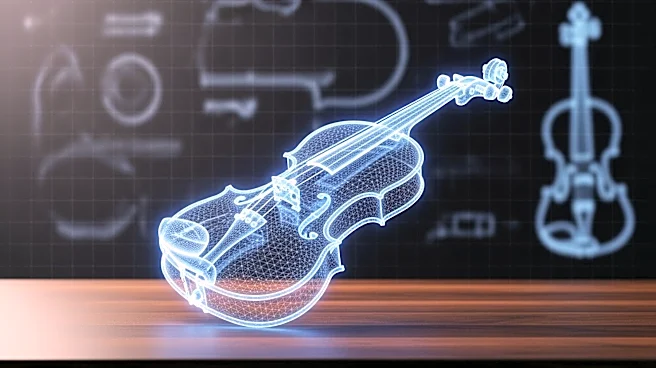
MIT engineers have developed a virtual violin, a computer simulation tool designed to assist luthiers in the design process by capturing the precise physics of the instrument. This tool can reproduce a realistic
sound of a plucked string, as detailed in a paper published in the journal npj Acoustics. Unlike traditional software that simulates violin sounds through sampling, the MIT model is based on the fundamental physics of the instrument. The project aims to help luthiers understand the physics of violin sound, potentially aiding in the design of new instruments. The research is part of a broader effort to explore the acoustics of violins, particularly those crafted during the 'Golden Age' by renowned luthiers like Antonio Stradivari.
Why It's Important?
The development of the virtual violin by MIT represents a significant advancement in the field of musical instrument design. By providing a tool that can simulate the physics of violin sound, luthiers can potentially streamline the design process, reducing the time and resources needed to craft high-quality instruments. This innovation could lead to more efficient production of violins with superior sound quality, benefiting both manufacturers and musicians. Additionally, the research contributes to the ongoing exploration of the unique acoustics of historical violins, which could inform future designs and preserve the legacy of master luthiers like Stradivari.
What's Next?
Future research will focus on expanding the capabilities of the virtual violin, including simulating more complex playing techniques such as bowing. This could further enhance the tool's utility for luthiers and researchers. As the technology develops, it may also attract interest from the broader music industry, potentially leading to collaborations with instrument manufacturers and musicians. The continued exploration of violin acoustics could also inspire similar projects for other musical instruments, broadening the impact of this research.
Beyond the Headlines
The virtual violin project highlights the intersection of technology and traditional craftsmanship, raising questions about the role of digital tools in preserving and enhancing artisanal skills. While the tool aims to assist luthiers, it also underscores the importance of maintaining the artistry and intuition that define the craft. As technology continues to evolve, balancing innovation with tradition will be crucial in ensuring that the cultural and historical significance of musical instruments is preserved.