






What's Happening?
The Federal Reserve's preferred inflation measure, the Personal Consumption Expenditures (PCE) price index, rose significantly in March 2026, reaching 3.5% compared to the previous year. This marks the highest level in nearly three years, driven by a sharp
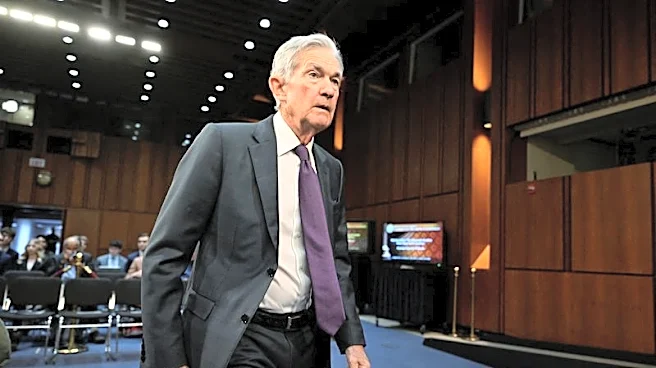
increase in energy prices due to the ongoing conflict in Iran. The core PCE price index, which excludes food and energy, increased by 0.3% from February and 3.2% annually. The rise in gas prices has pushed inflation further from the Fed's 2% target, delaying potential interest rate cuts. Outgoing Fed Chair Jerome Powell indicated that the central bank would likely maintain its current interest rate stance as it assesses the impact of the conflict.
Why It's Important?
The surge in the PCE price index highlights the economic impact of geopolitical tensions, particularly the Iran conflict, on U.S. inflation and monetary policy. The increase in energy prices is straining consumer budgets and could potentially slow economic growth by diverting spending from other goods and services. The Federal Reserve's decision to hold interest rates steady reflects concerns about inflationary pressures and the need to stabilize the economy. This situation underscores the interconnectedness of global events and domestic economic conditions, affecting both consumer behavior and policy decisions.
What's Next?
The Federal Reserve will continue to monitor inflation trends closely, particularly how energy costs influence core inflation. Future policy decisions will depend on the trajectory of inflation and economic growth. The central bank may face pressure to adjust interest rates if inflation persists above target levels. Additionally, the ongoing conflict in Iran and its impact on global oil markets will remain a critical factor in economic forecasts and policy considerations.