


What's Happening?
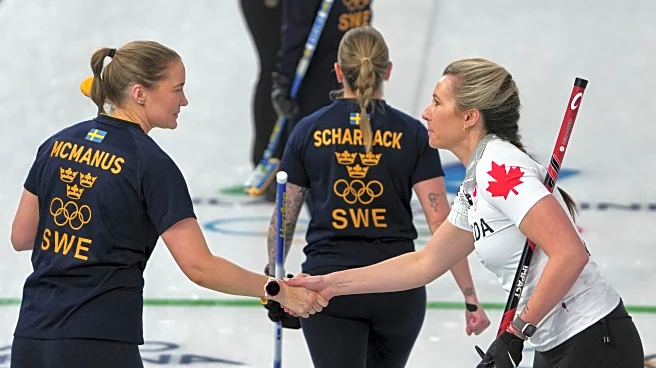
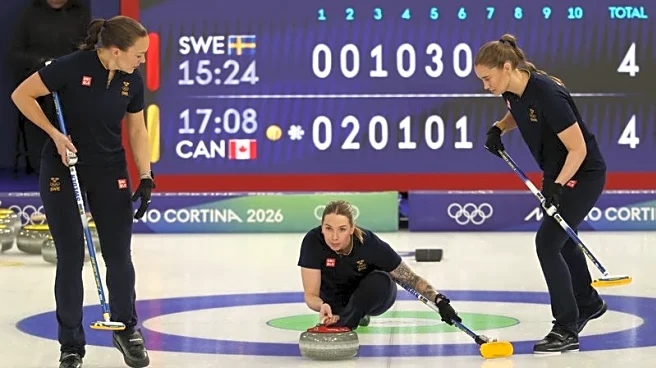
During the men's curling round-robin play at the 2026 Winter Olympics, a controversy erupted when Sweden accused Canada of cheating. Swedish curler Oskar Eriksson alleged that Canada's Marc Kennedy double-touched the stone during their match, which Canada won 8-6. This accusation led to a heated exchange between the teams and resulted in a verbal warning from World Curling. In response to the allegations, World Curling announced that officials would closely monitor future deliveries. The incident has not only raised concerns among competitors but has also become a viral sensation on the internet. A video showing Kennedy's alleged infraction has been widely shared, leading to a proliferation of memes and humorous edits online.
Why It's Important?
The controversy
highlights the intense scrutiny and pressure athletes face during the Olympics, where even minor infractions can lead to significant disputes. For the sport of curling, which relies heavily on precision and sportsmanship, such allegations can tarnish its reputation and affect the integrity of the competition. The incident also underscores the role of social media in shaping public perception, as the viral spread of memes can overshadow the seriousness of the allegations. This situation could influence how sports organizations handle disputes and the importance of maintaining fair play in international competitions.
What's Next?
World Curling's decision to monitor future matches more closely suggests a commitment to ensuring fair play and addressing any potential rule violations. The incident may prompt discussions within the International Olympic Committee (IOC) about the need for clearer guidelines and stricter enforcement of rules in curling and other sports. Additionally, the viral nature of the controversy could lead to increased media attention on future matches, potentially affecting the athletes' performance and public perception of the sport.