






What's Happening?
FedEx Freight is preparing to become a standalone company on June 1, and its incoming CEO, John A. Smith, has outlined the company's strategic focus at the ACT Expo in Las Vegas. The strategy emphasizes sustainability and operational efficiency, with
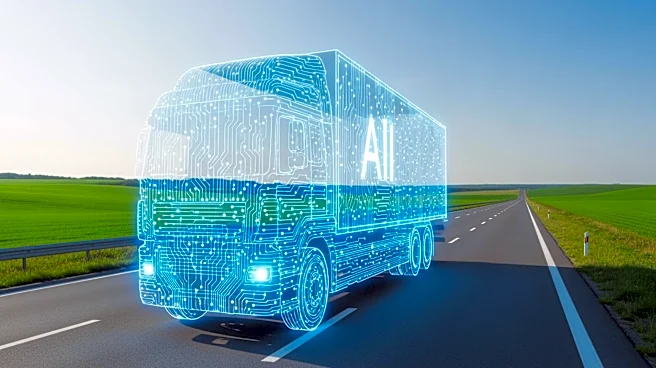
a focus on practical clean-fleet deployment, network optimization, and the use of predictive AI. FedEx Freight plans to use compressed natural gas (CNG) and renewable natural gas (RNG) for heavy-duty long-haul operations, while electrification will be applied where operationally feasible, such as in electric forklifts and local delivery vehicles. The company is also enhancing its network by shifting from weight-based to cube-based dimensional planning, which has improved cube utilization by 12% over the past year. Additionally, FedEx Freight is integrating AI to enhance real-time visibility and predictive maintenance, aiming to reduce empty miles and improve operational reliability.
Why It's Important?
The strategic shift by FedEx Freight highlights the growing importance of sustainability and technology in the logistics industry. By focusing on clean-fleet deployment and network optimization, FedEx Freight aims to reduce emissions and improve efficiency, which is crucial in an industry facing increasing environmental scrutiny and economic pressures. The use of AI for real-time operations and predictive maintenance represents a significant advancement in logistics, potentially setting a new standard for the industry. This approach not only aims to enhance operational efficiency but also aligns with broader industry trends towards sustainability and technological integration. The success of FedEx Freight's strategy could influence other logistics companies to adopt similar practices, potentially leading to industry-wide changes.
What's Next?
As FedEx Freight transitions to an independent entity, the company will focus on refining its operational strategies rather than expanding its footprint. The emphasis will be on precision in network design, reducing wasted miles, and leveraging technology to support operations. The company is also calling for greater coordination across the freight ecosystem, including OEMs, utilities, and policymakers, to support fleet electrification and infrastructure development. This collaborative approach could lead to more standardized and efficient logistics operations across the industry. Stakeholders will be watching closely to see how FedEx Freight's strategies unfold and whether they can deliver the promised improvements in sustainability and efficiency.