


What's Happening?
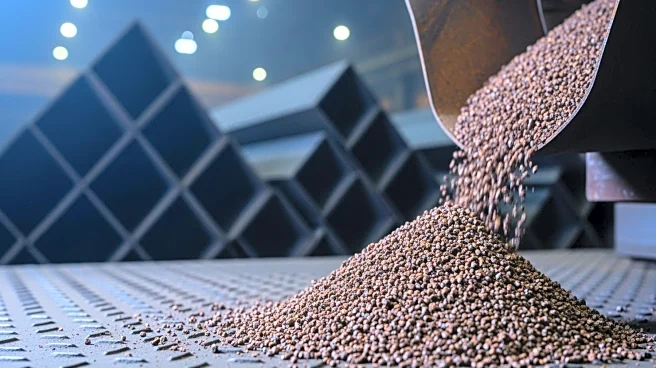
Iron ore flows have seen a notable increase in 2025, with global seaborne iron ore flows reaching 1.7 billion tonnes, marking a 3% rise from the previous year. This growth is primarily driven by China, which saw a 4% increase in imports, and India, where imports surged by 72% from a smaller base. Despite this increase in trade volumes, the demand for steel remains weak, as evidenced by a 2% decline in global crude steel production in the first 11 months of 2025. In China and Japan, the two largest importers of iron ore, steel production fell by 4%, highlighting a disconnect between iron ore imports and actual steel demand. This has led to a buildup of iron ore stocks at Chinese ports, reaching multi-year highs. The situation is compounded by government
efforts to curb overcapacity and trade barriers, which are expected to further impact production in 2026.
Why It's Important?
The increase in iron ore flows, despite weak steel demand, underscores significant challenges in the global iron ore market. The rising stockpiles in China could lead to market imbalances, affecting global prices and trade dynamics. For the U.S., which is a major player in the global steel industry, these developments could influence domestic steel prices and production strategies. The situation also highlights the importance of monitoring trade policies and production capacities in major markets like China and India, as these factors can have ripple effects on global supply chains and economic stability. Additionally, the potential long-term implications of new supply routes, such as Guinea's Simandou Project, could alter trade patterns and impact freight costs.
What's Next?
Looking ahead, the market will likely continue to grapple with the effects of high stock levels in China and weak steel demand. The anticipated ramp-up of the Simandou Project in Guinea, although not expected until late 2028, could eventually provide some relief by diversifying supply sources. However, in the short term, the focus will remain on how Chinese policies and global trade dynamics evolve. Stakeholders in the U.S. steel industry will need to stay vigilant, adapting to potential shifts in global supply and demand, and considering strategic responses to maintain competitiveness.