


What's Happening?
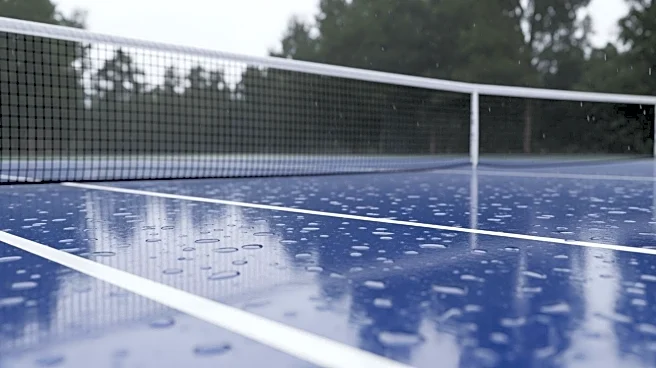
The Miami Open, held at Hard Rock Stadium in Miami Gardens, Florida, faced significant disruptions on Wednesday due to heavy and persistent rain. All scheduled matches were postponed, impacting both the ATP and WTA events. Notable matches that were set
to take place included France's Alexandre Muller against Italy's Matteo Berrettini and American Reilly Opelka versus Portugal's Nuno Borges. The weather conditions have forced organizers to reschedule these matches, affecting the tournament's timeline and players' preparations. The rain delay has also impacted the Thursday schedule, which includes high-profile matches such as an all-Polish face-off between No. 2 Iga Swiatek and Magda Linette, and an all-U.S. clash between Jennifer Brady and Sloane Stephens. Additionally, three-time Miami champion Venus Williams is set to play against Great Britain's Francesca Jones.
Why It's Important?
The postponement of matches at the Miami Open due to rain highlights the challenges outdoor sports events face with unpredictable weather conditions. This disruption not only affects the players' schedules and preparations but also has broader implications for the tournament's logistics and broadcasting arrangements. For players, especially those who rely on momentum and routine, such delays can impact performance and strategy. The tournament organizers must now adjust the schedule to accommodate the postponed matches, which could lead to a more congested lineup in the following days. This situation underscores the importance of contingency planning in sports events to minimize the impact of weather-related disruptions on both players and fans.
What's Next?
With the rain causing a significant delay, the Miami Open organizers will need to reschedule the postponed matches, likely leading to a tighter schedule in the coming days. Players will have to adapt quickly to the changes, potentially playing multiple matches in a short period. This could affect their performance and increase the risk of injuries due to less recovery time. Fans and broadcasters will also need to adjust to the new schedule, which may impact viewership and coverage. The tournament's ability to efficiently manage these changes will be crucial in maintaining the event's integrity and ensuring a fair competition for all participants.