




What's Happening?
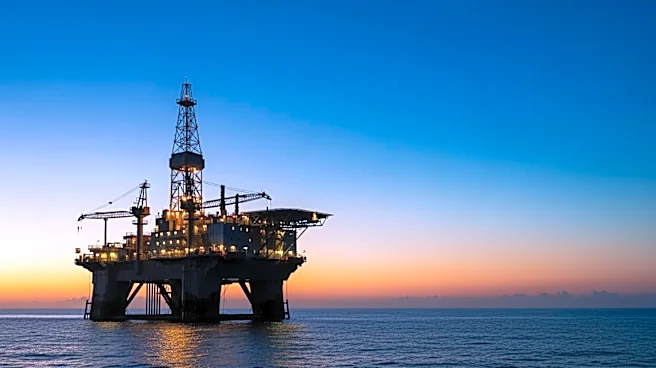
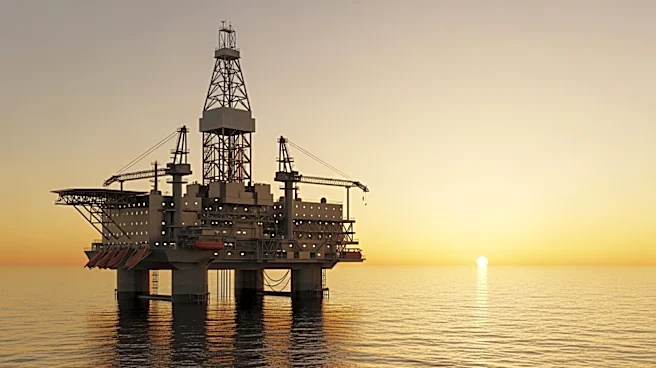
Guyana and Namibia are emerging as significant players in the global oil supply landscape, each with unique investment profiles and development timelines. Guyana, with its Stabroek Block, has transitioned from a frontier to a benchmark in oil production
since its first major discovery in 2015. The country has rapidly scaled production to over 600,000 barrels per day, with expectations to exceed one million barrels per day. This success is attributed to efficient project execution and substantial investments from major oil companies like ExxonMobil, Hess, and CNOOC. In contrast, Namibia is in the early stages of exploration, with promising offshore discoveries in the Orange Basin led by TotalEnergies, Shell, and Galp. While Namibia's potential is significant, it remains in the appraisal phase, lacking large-scale production and established infrastructure.
Why It's Important?
The developments in Guyana and Namibia are reshaping the flow of capital into frontier oil exploration, highlighting a shift in global oil supply towards new, large-scale offshore basins. Guyana's proven execution model has attracted tens of billions in investment, offering lower risk and visible returns, making it a development story. Namibia, on the other hand, presents a discovery story with significant upside potential but also considerable uncertainty. The involvement of major oil companies in both countries underscores their confidence in these regions' potential. For investors, Guyana represents immediate returns, while Namibia offers future opportunities contingent on successful appraisals and infrastructure development. This dynamic illustrates the broader trend of capital concentration in oil plays that promise either proven execution or world-class potential.
What's Next?
Guyana is expected to continue its trajectory as a major oil producer, contributing significantly to global supply. Its established infrastructure and production capabilities position it for sustained growth. Namibia's future impact hinges on successful appraisals, final investment decisions, and infrastructure development. If these elements align, Namibia could become a major offshore producer in the next decade. The ongoing exploration and appraisal activities will determine the pace and scale of Namibia's development. Both countries' trajectories will be closely watched by investors and industry stakeholders, as they represent different stages of oil exploration and production with varying risk and reward profiles.
Beyond the Headlines
The contrasting development stages of Guyana and Namibia highlight the complexities of frontier oil exploration. Guyana's rapid development has been facilitated by its stable political environment and alignment with Western partners, which have supported infrastructure and production expansion. Namibia, while politically stable, faces the challenge of building its regulatory framework and infrastructure from scratch. The success of these countries could influence future investment decisions in other frontier regions, as investors seek opportunities that balance risk with potential returns. The geopolitical implications of these developments are also significant, as they could alter global oil supply dynamics and influence energy security strategies.