

What's Happening?
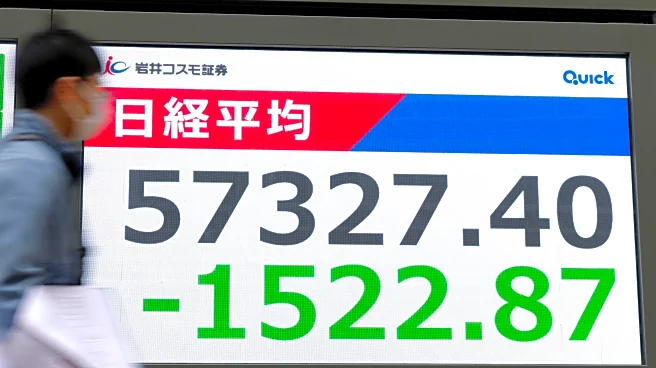
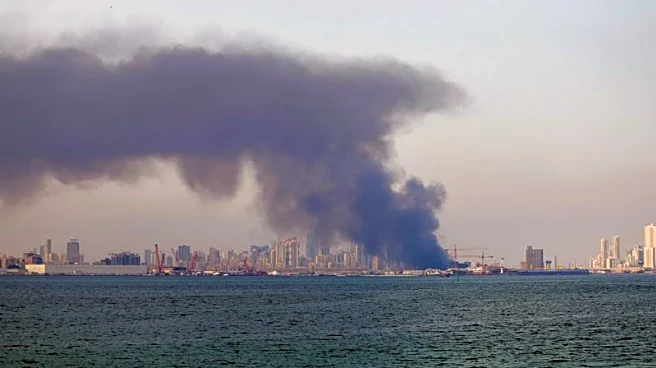
Wall Street experienced a significant sell-off on Monday, triggered by the U.S. and Israel's joint military action against Iran over the weekend. This geopolitical tension initially caused a downturn in the stock market, with major indexes opening in the red.
However, traders quickly seized the opportunity to invest in undervalued stocks, leading to a recovery in the Nasdaq Composite by the afternoon. The Dow Jones Industrial Average remained slightly negative, while the S&P 500 hovered near the flatline, recovering from earlier lows. The market's response highlights the limited long-term impact of geopolitical conflicts, as investors often price in worst-case scenarios early on. The S&P 500, for instance, has historically rebounded within three months following major geopolitical shocks.
Why It's Important?
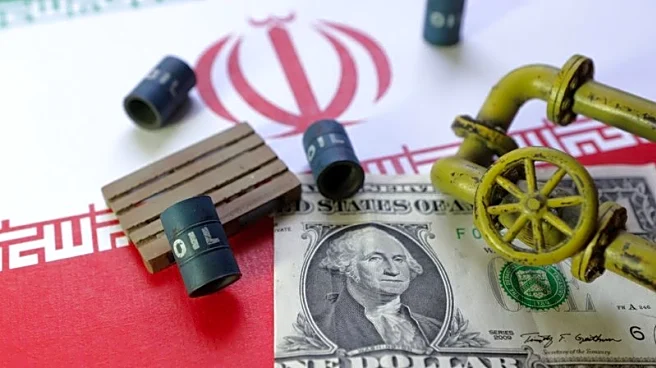
The ongoing U.S.-Iran conflict has significant implications for global trade and economic stability. The closure of the Strait of Hormuz by Iran's Revolutionary Guard has already led to a rise in oil prices, affecting energy stocks and potentially leading to higher costs for consumers and businesses. Defense stocks have also seen gains, although a prolonged conflict could alter the sector's outlook. The situation underscores the interconnectedness of global markets and the potential for geopolitical events to disrupt economic activities. Investors are closely monitoring the situation, as prolonged hostilities could lead to further market volatility and impact sectors such as energy and defense.
What's Next?
The future trajectory of the stock market will largely depend on the duration and intensity of the U.S.-Iran conflict. A swift resolution could stabilize oil prices and reduce market volatility, while a prolonged conflict might lead to sustained disruptions in global trade routes and energy supplies. Investors are advised to consider safe-haven assets like gold, which is expected to rise in value during geopolitical tensions. Additionally, the potential for further military actions or retaliations could influence market dynamics, making it crucial for stakeholders to stay informed and adapt their strategies accordingly.