
What's Happening?
As the FIFA World Cup approaches, ticket prices for group stage matches in the United States have reached unprecedented levels, with some tickets costing as much as $4,105. The United States' opening game
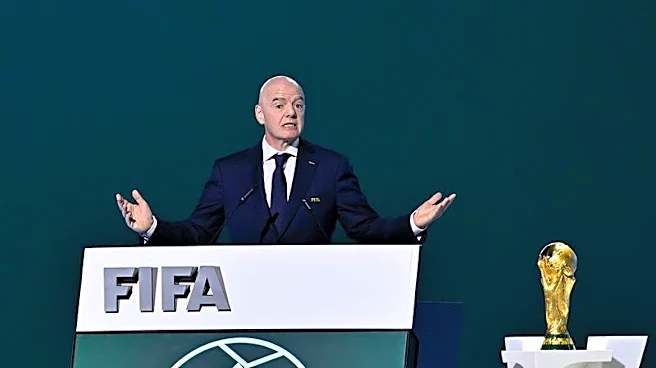
against Paraguay in Los Angeles is the most expensive, while the cheapest tickets for other matches are priced at $380. FIFA has introduced dynamic pricing for the first time, leading to significant price variations based on ticket categories. Despite the high costs, demand remains strong, with FIFA President Gianni Infantino stating that the demand is equivalent to '1,000 years of World Cups at once.' Many fans have expressed frustration over the pricing strategy, accusing FIFA of a 'monumental betrayal.' Tickets are also available on resale platforms, where FIFA takes a 30% cut from sales.
Why It's Important?
The high ticket prices for the World Cup in the U.S. highlight the growing commercialization of major sporting events, potentially limiting access for average fans. This situation underscores the tension between maximizing revenue and maintaining the sport's accessibility. The pricing strategy could impact fan engagement and attendance, particularly for less high-profile matches. Additionally, the controversy may affect FIFA's reputation, as fans criticize the organization for prioritizing profit over the fan experience. The economic implications are significant, as the event is expected to generate substantial revenue, but the backlash could influence future ticketing policies and fan relations.
What's Next?
As the tournament nears, it remains to be seen how FIFA will address the ongoing criticism regarding ticket prices. The organization may face pressure to adjust its pricing strategy or offer more affordable options to appease disgruntled fans. Additionally, the resale market will likely continue to play a significant role, with prices fluctuating based on demand. Stakeholders, including sponsors and broadcasters, will be closely monitoring fan reactions and attendance figures, which could influence future partnerships and investments in the sport.