






What's Happening?
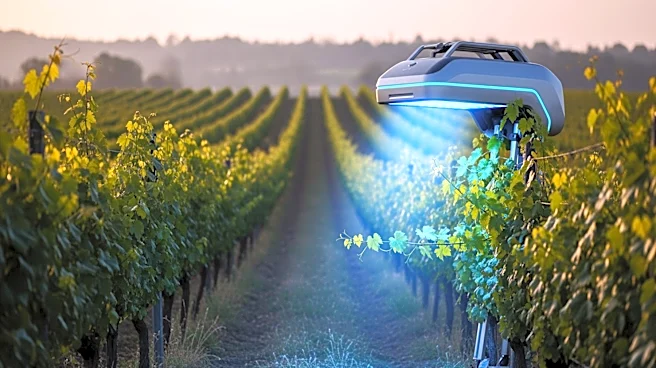
Castoro Cellars, a prominent vineyard in California's Central Coast, is expanding its use of UV-C light technology from Saga Robotics to over 600 acres of organic vineyards. This initiative aims to combat powdery mildew, a common issue in viticulture,
without the use of traditional chemical treatments like oils and sulfur. Saga Robotics has been collaborating with Castoro Cellars for three years, deploying autonomous robots that apply UV-C light directly to the vine canopy. This method disrupts the reproductive cycle of mildew and other diseases without leaving harmful residues or causing soil disruption. The expansion is seen as a significant move towards sustainable and chemical-free winegrowing, which is considered the 'holy grail' by industry experts.
Why It's Important?
The deployment of UV-C technology in vineyards represents a shift towards more sustainable agricultural practices. By reducing reliance on chemical fungicides, which are becoming less effective, vineyards can achieve higher yields and lower labor costs. This approach not only benefits the environment by reducing chemical residues and soil compaction but also aligns with the growing consumer demand for organic and sustainably produced wines. The success of this technology could encourage other vineyards to adopt similar practices, potentially transforming the wine industry and setting new standards for organic farming.
What's Next?
Saga Robotics plans to continue expanding its operations in California and beyond, with ongoing discussions for trials and commercial rollouts in various wine regions globally. The company operates on a 'Robots as a Service' model, allowing growers to rent the robots and assess their effectiveness before committing to a purchase. This model could facilitate wider adoption of the technology, as it offsets costs associated with chemicals, labor, and machinery. Additionally, Saga Robotics is enhancing its robots with cameras for data collection, which could further improve vineyard management and disease detection.
Beyond the Headlines
The use of UV-C technology in agriculture highlights a broader trend towards precision farming, where technology is used to optimize crop management and reduce environmental impact. This approach not only addresses immediate issues like mildew control but also contributes to long-term soil health and ecosystem preservation. As the agricultural sector faces increasing pressure to reduce its carbon footprint, innovations like these could play a crucial role in achieving sustainability goals.