
What's Happening?
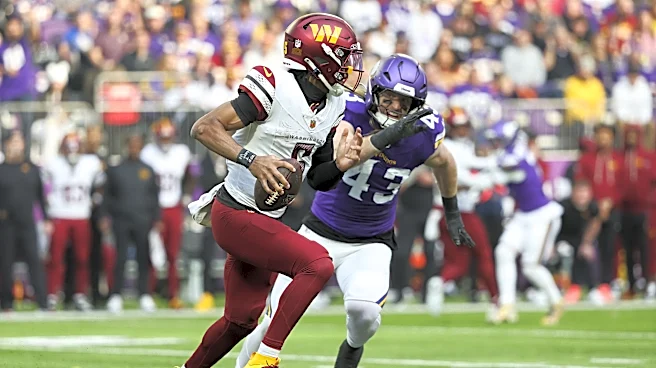
Jayden Daniels, the quarterback for the Washington Commanders, is facing significant challenges in his NFL career due to recurring injuries. In his sophomore year, Daniels suffered multiple injuries, including
a knee sprain, a hamstring injury, and a dislocated elbow, which limited his playtime to only seven games. These injuries occurred during various plays, primarily when Daniels was scrambling or being sacked. Despite his mobility being a key asset, it has also increased his risk of injury. The Commanders have made efforts to protect Daniels by improving their offensive line and changing their offensive coordinator, but the quarterback's style of play continues to pose risks.
Why It's Important?
Daniels' situation highlights the broader issue of player safety in the NFL, particularly for quarterbacks who rely on mobility. His injuries not only affect his career trajectory but also impact the Commanders' performance and strategy. The team's efforts to protect Daniels underscore the importance of balancing a player's strengths with their safety. This situation could influence how other teams approach the protection of their mobile quarterbacks, potentially leading to changes in training, play-calling, and player management to minimize injury risks.
What's Next?
The Commanders are likely to continue adjusting their strategies to better protect Daniels, possibly incorporating more conservative play-calling or enhancing their offensive line further. Daniels himself may need to adapt his playing style to reduce injury risks, focusing on safer scrambling techniques and quicker decision-making. The team's success in managing Daniels' health could set a precedent for how other teams handle similar situations with their quarterbacks.
Beyond the Headlines
Daniels' injuries raise questions about the long-term sustainability of mobile quarterbacks in the NFL. As the league evolves, there may be increased emphasis on developing protective measures and training programs to support these players. Additionally, the financial implications for teams investing in high-profile quarterbacks who are frequently injured could lead to shifts in contract negotiations and player evaluations.