






What's Happening?
Firestorm Labs has been awarded up to $30 million through the Department of War's Accelerate the Procurement and Fielding of Innovative Technologies (APFIT) program. This funding is aimed at expanding the deployment of Firestorm's xCell containerized
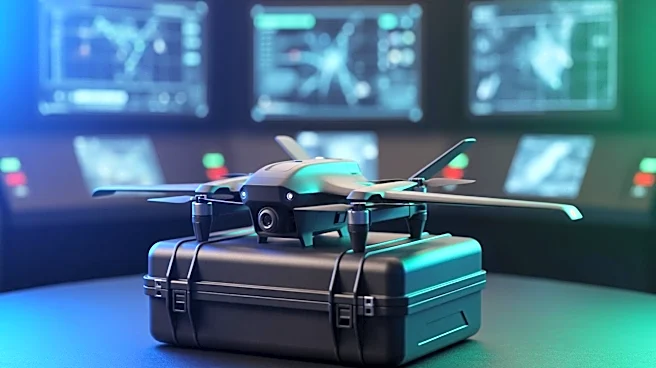
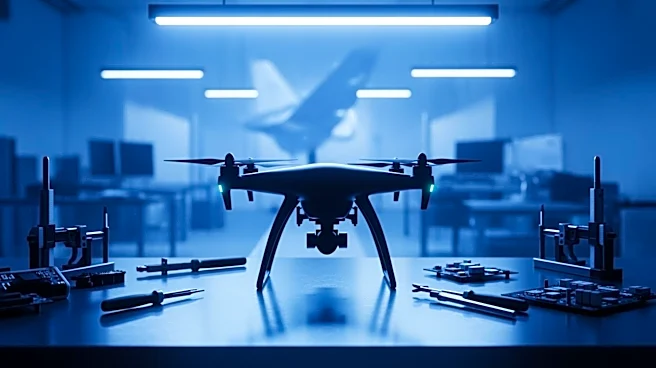
manufacturing platform and increasing the production of the Tempest family of uncrewed aerial systems (UAS). The initiative supports U.S. and allied forces operating in the Indo-Pacific region, where extended logistics networks are vulnerable to disruption. Firestorm's xCell platform allows for on-site production, sustainment, and repair of combat-ready Tempest UAS, reducing reliance on these vulnerable supply chains. The company has already begun fielding these systems to operational units, enhancing their ability to sustain distributed operations.
Why It's Important?
The APFIT award to Firestorm Labs is significant as it addresses a critical gap in the U.S. military's logistics capabilities, particularly in contested environments like the Indo-Pacific. By enabling forward-deployed units to produce and maintain UAS on-site, the xCell platform reduces dependency on extended supply chains, which are susceptible to disruption. This capability is crucial for maintaining operational readiness and effectiveness in modern conflict scenarios. The initiative aligns with the Department of War's focus on Contested Logistics, one of the six Critical Technology Areas, and underscores the importance of resilient, forward-deployable manufacturing solutions in maintaining the operational edge of U.S. and allied forces.
What's Next?
With the APFIT funding, Firestorm Labs plans to scale up production capacity and accelerate the fielding of its xCell platform and Tempest UAS. This expansion will support the operational integration of expeditionary manufacturing across various Indo-Pacific mission sets. The company aims to enhance the speed and scale at which these capabilities are deployed, ensuring that U.S. and allied forces have the necessary tools to meet the demands of modern conflict. As Firestorm advances toward full-rate production, the focus will be on equipping warfighters with the technology needed to sustain distributed operations effectively.