






What's Happening?
Palantir Technologies has announced a significant $300 million contract with the U.S. Department of Agriculture (USDA) to utilize its technology in managing farmland, as global supply chains face increasing geopolitical risks. This agreement highlights
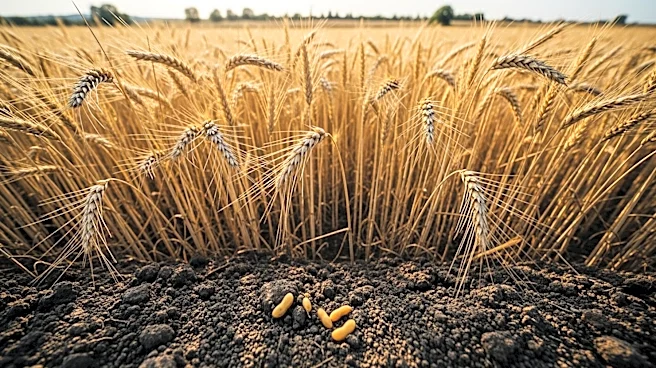
Palantir's expanding role within the U.S. government, extending beyond its traditional defense contracts. The deal comes at a time when U.S. farmers are dealing with rising supply costs and the impacts of ongoing trade tensions, particularly with China, a major purchaser of U.S. soybeans. The USDA's partnership with Palantir aims to address these challenges by leveraging the company's digital tools to enhance agricultural management and safeguard the food supply.
Why It's Important?
This contract underscores the growing importance of technology in managing agricultural resources amid geopolitical uncertainties. By partnering with Palantir, the USDA seeks to mitigate risks associated with foreign land acquisitions and trade disruptions, which have been exacerbated by geopolitical tensions. The deal also reflects broader concerns about national security and economic stability, as foreign investments in U.S. farmland have drawn scrutiny. For Palantir, this contract represents a strategic expansion into non-defense sectors, potentially opening new revenue streams and reinforcing its position as a key government contractor. The move could also influence other tech companies to explore similar opportunities in the agricultural sector.
What's Next?
The USDA's collaboration with Palantir may prompt further reforms in agricultural policy, particularly regarding foreign investment disclosures. As the USDA implements Palantir's technology, it could lead to more efficient management of agricultural resources and potentially influence future trade negotiations. Additionally, the success of this partnership might encourage other government agencies to adopt similar technological solutions, further integrating tech companies into public sector operations. Stakeholders, including farmers and policymakers, will likely monitor the outcomes closely to assess the effectiveness of such collaborations in addressing complex geopolitical challenges.