







What's Happening?
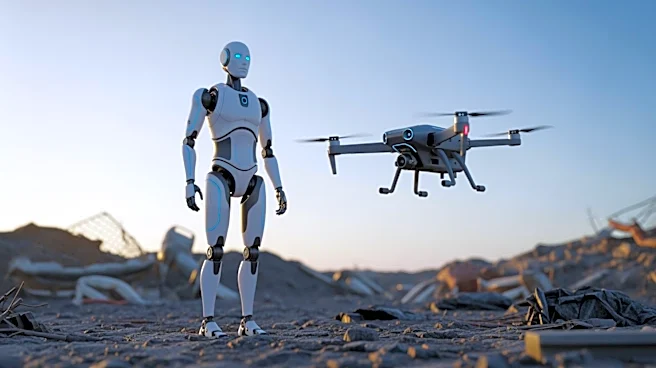
Flash, a humanoid robot developed by the Chinese smartphone company Honor, has set a new record by surpassing the human world record for the half-marathon. This achievement marks a significant milestone in robotics, showcasing the potential of humanoid robots
in athletic performance. Honor's pivot towards humanoid robotics raises questions about the future direction of the company and whether other tech firms might follow suit in exploring similar innovations.
Why It's Important?
The breakthrough by Honor's robot highlights the rapid advancements in robotics and artificial intelligence, which could have far-reaching implications for various industries, including sports, healthcare, and manufacturing. The ability of robots to perform complex physical tasks could lead to new applications and efficiencies, potentially transforming labor markets and economic models. This development also underscores the growing competition in the tech industry to push the boundaries of what robots can achieve.
Beyond the Headlines
The success of Flash in breaking a human athletic record may spark ethical and regulatory discussions about the role of robots in competitive sports. As robots become more capable, there could be debates over the fairness of their participation in events traditionally reserved for humans. Additionally, the integration of advanced robotics into everyday life raises questions about privacy, security, and the potential displacement of human workers.