


What's Happening?
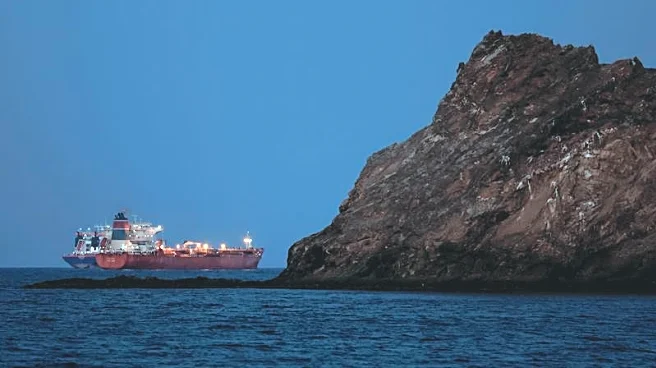
West Texas Intermediate (WTI) crude prices have risen above $100 per barrel for the first time since 2022, driven by the escalating conflict in Iran and disruptions in the Strait of Hormuz. The strait, a critical passage for global oil shipments, has
seen restricted vessel traffic, leading to tightened supply and increased market concerns over physical availability. The conflict has also resulted in a buildup of U.S. military presence in the region, further heightening geopolitical tensions. Analysts suggest that the price surge reflects a shift in market expectations, with a focus on supply constraints and geopolitical risks.
Why It's Important?
The rise in crude prices has significant implications for the global economy, particularly for industries reliant on oil. Higher oil prices can lead to increased costs for transportation and manufacturing, potentially driving inflation and affecting consumer spending. The situation also underscores the vulnerability of global energy markets to geopolitical events, highlighting the need for diversified energy sources and supply routes. For the U.S., the conflict in Iran and the resulting price surge could impact domestic energy policy and economic stability, as well as influence diplomatic relations with Middle Eastern countries.
What's Next?
As the conflict in Iran continues, further disruptions to oil supply are possible, which could lead to additional price increases. The U.S. and other countries may need to consider strategic responses, such as releasing oil reserves or seeking alternative supply sources, to mitigate the impact on global markets. Diplomatic efforts to de-escalate the conflict and ensure the security of key shipping routes will be crucial in stabilizing the situation. The ongoing volatility in oil prices may also prompt discussions on energy independence and the transition to renewable energy sources.