
What's Happening?
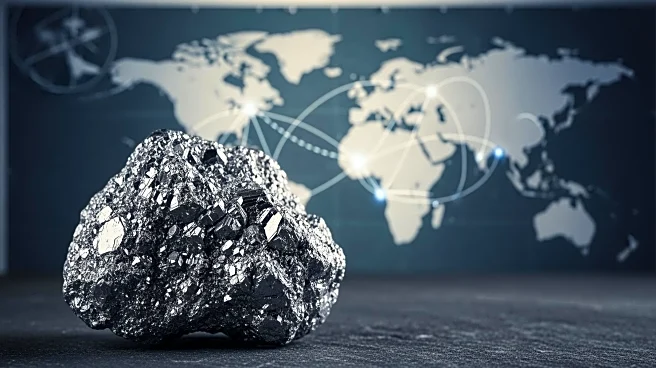
The United States has been actively increasing its stockpile of critical minerals, a move reminiscent of Cold War-era strategies, in response to rising geopolitical tensions. This initiative is part of a broader
effort to secure supply chains and reduce dependency on foreign sources, particularly from countries like China, which dominates the refining capacity for key minerals such as graphite and rare earths. The U.S. Defense Logistics Agency has been tasked with acquiring these critical minerals, highlighting the strategic importance placed on these resources. This approach is mirrored by the European Union, which is launching a new stockpiling pilot scheme set to become operational in early 2026. The EU's strategy includes a €3 billion investment to boost its critical minerals sector, focusing on public-private partnerships and supply chain diversification.
Why It's Important?
The U.S. and EU's focus on stockpiling critical minerals underscores the strategic importance of these resources in modern economies, particularly for defense and technology sectors. By securing a stable supply of critical minerals, the U.S. aims to mitigate risks associated with geopolitical tensions and supply chain disruptions. This move is crucial for maintaining national security and supporting industries reliant on these materials, such as renewable energy and defense. The initiative also reflects a shift towards greater self-reliance and reduced dependency on single-source suppliers, particularly in light of China's dominance in the market. The potential impact on industries is significant, as it could lead to increased investment in domestic mining and processing capabilities, fostering economic growth and technological advancement.
What's Next?
As the U.S. continues to bolster its stockpile of critical minerals, further actions may include increased government support for domestic mining projects and enhanced collaboration with allies to secure supply chains. The EU's pilot scheme, set to launch in 2026, will likely influence similar initiatives in the U.S., promoting coordinated efforts to address supply chain vulnerabilities. Additionally, the focus on critical minerals may lead to policy changes aimed at encouraging investment in mining and processing infrastructure. Stakeholders, including industry leaders and policymakers, will need to navigate the complexities of balancing economic interests with national security concerns, potentially leading to new regulations and strategic partnerships.
Beyond the Headlines
The emphasis on stockpiling critical minerals highlights broader geopolitical dynamics, as countries seek to assert independence in resource acquisition. This trend may lead to increased competition for access to mineral-rich regions, potentially impacting global trade relations. The ethical implications of mining practices and environmental concerns will also come to the forefront, as nations strive to balance resource extraction with sustainability goals. Long-term, this focus on critical minerals could drive innovation in recycling and alternative materials, reducing reliance on traditional mining and fostering a more sustainable approach to resource management.