



What's Happening?
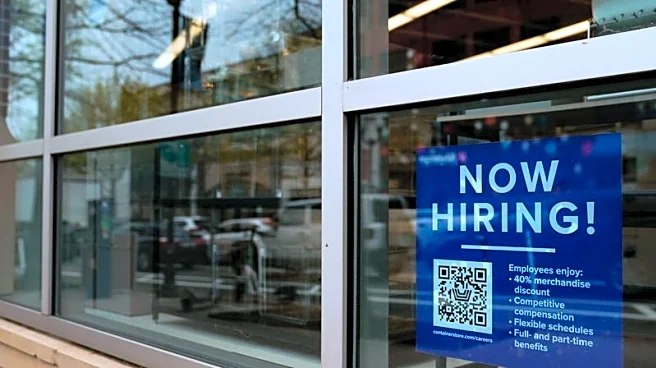
The U.S. economy added 130,000 jobs in January, marking an improvement over 2025 figures, but the labor market remains stagnant. The unemployment rate fell to 4.3%, yet job growth is concentrated in a few sectors, primarily healthcare. Revisions to previous data reveal minimal gains in the latter half of 2025, with a net loss of 1,000 jobs over six months. Economist Gregory Daco predicts subdued job growth for 2026, potentially not exceeding 50,000 new jobs. Concerns are also rising over declining income gains, which could impact consumer spending, a key economic driver.
Why It's Important?
The current job market conditions are crucial as they reflect broader economic challenges. The concentration of job growth in specific sectors and declining income gains could
hinder economic recovery and growth. Consumer spending, which constitutes a significant portion of U.S. economic activity, may be at risk if income growth remains weak. This situation could lead to an 'income-less expansion,' affecting families' financial stability and overall economic health.
What's Next?
As the U.S. navigates these economic challenges, policymakers and economists will need to address the underlying issues affecting job growth and income gains. Strategies to diversify job opportunities and enhance income growth will be essential to support consumer spending and economic stability. Monitoring economic indicators and adjusting policies accordingly will be critical in ensuring a sustainable recovery.