




What's Happening?
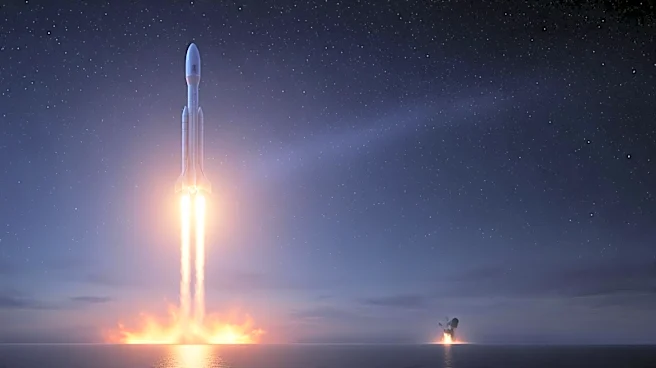
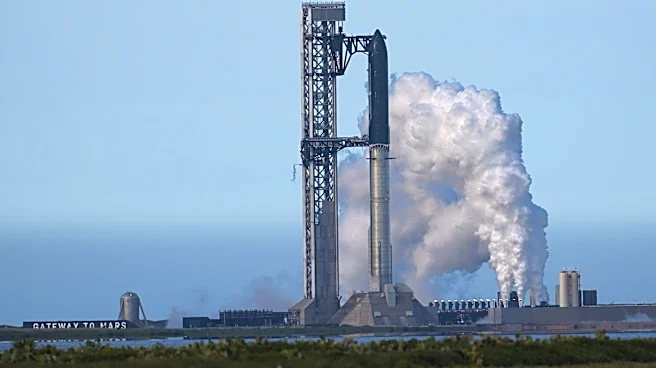
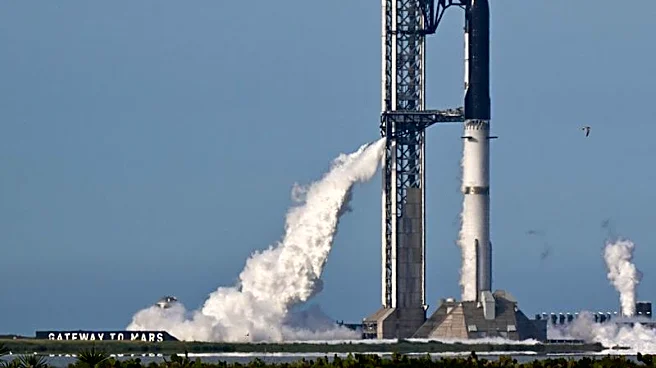
SpaceX's latest Starship test flight, known as Flight 12, ended with the Super Heavy booster crashing into the Gulf of Mexico after a failed splashdown attempt. This mission marked the first launch of the Starship V3 design, featuring upgraded Raptor
engines intended for easier maintenance and faster reuse. The rocket, which is the most powerful ever launched, lifted off from Texas with 33 Super Heavy booster engines and six engines on the upper stage. Despite one engine failing to ignite at liftoff, the rocket successfully completed stage separation. However, the Super Heavy booster was unable to complete its boostback burn and failed to relight its engines for a controlled splashdown, resulting in it breaking apart upon impact with the sea.
Why It's Important?
The test flight is significant as it represents a critical step in SpaceX's development of the Starship, which is central to future space exploration missions, including NASA's Artemis program aimed at returning humans to the Moon. The failure of the booster to complete its splashdown highlights the technical challenges SpaceX faces in perfecting the reusability of its rockets, a key component of reducing costs for space travel. The incident underscores the complexities involved in developing new space technologies and the iterative nature of testing and improvement in aerospace engineering.
What's Next?
SpaceX will likely analyze the data from this test flight to address the issues encountered, particularly the failure of the booster to complete its landing maneuver. Future test flights will be crucial in refining the Starship's design and ensuring the reliability of its components. The company is expected to continue its rigorous testing schedule to meet its ambitious goals for the Starship program, including its role in NASA's lunar missions.