






What's Happening?
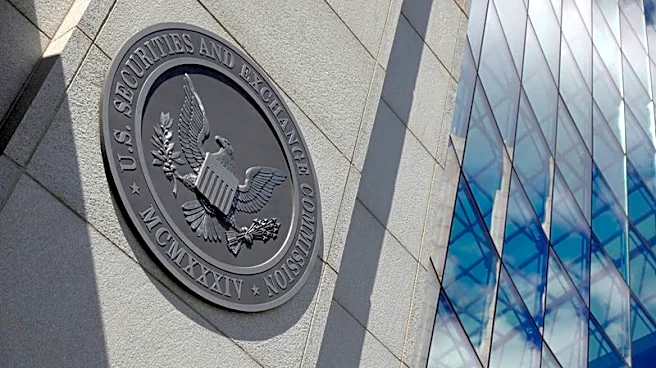
The Securities and Exchange Commission (SEC) has decided to reverse the Pattern Day Trader rule, a regulation that required active margin traders to maintain a minimum of $25,000 in their brokerage accounts to engage in frequent trading. This rule, established
in the early 2000s following the dotcom crash, was intended to mitigate the risks associated with small investors trading with borrowed money. The new regulation shifts focus from the number of trades to ensuring that accounts have sufficient funds to support the risk at any given moment. Brokerages will now monitor accounts in real time to prevent margin deficits, with the option to freeze accounts for up to 90 days if a shortfall is not rectified within five business days. Critics of the old rule argued that it functioned more as a wealth test than a safety measure, as it allowed traders with slightly more than $25,000 to continue trading while blocking those with slightly less.
Why It's Important?
The reversal of the Pattern Day Trader rule is significant for retail investors and brokerage firms. It provides more flexibility for retail investors, particularly those using platforms like Robinhood and Webull, which have attracted novice investors with lower account balances. This change is expected to increase trading activity among retail investors, potentially benefiting brokerage firms financially. However, there are concerns that the removal of the $25,000 requirement could lead to increased risk-taking by inexperienced traders, influenced by social media and online personalities. The decision reflects a shift in regulatory approach, acknowledging the evolution of trading practices with the advent of zero-commission trading apps and real-time data access.
What's Next?
The Financial Industry Regulatory Authority (FINRA) will implement the new system, allowing brokerages 45 days after the formal notice to adapt, with an 18-month phase-in period. The long-term impact on retail traders remains to be seen, particularly in volatile market conditions. Critics may revisit this decision if future market disruptions occur, especially involving meme stocks or options trading. Meanwhile, brokerage firms like Robinhood and Webull have already seen positive market reactions, with their shares rising over 10% following the announcement.