






What's Happening?
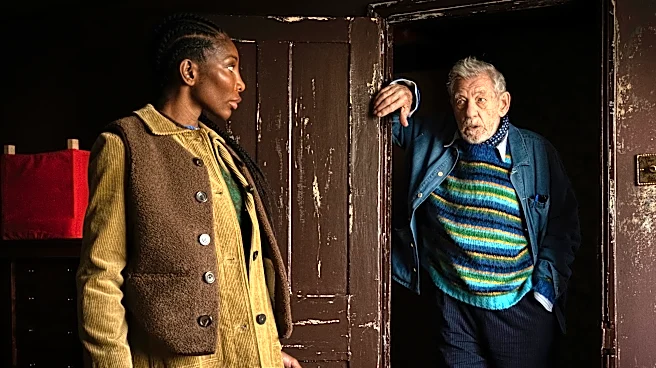
Steven Soderbergh's latest film, 'The Christophers,' delves into the themes of artistic legacy and generational conflict. The film centers on Julian Sklar, an aging artist played by Ian McKellen, who is struggling with his fading career. Sklar, once a renowned
painter, now supports himself by recording personalized messages on a Cameo-style platform. His children, portrayed by James Corden and Jessica Gunning, devise a plan to profit from his unfinished works by hiring art restorer Lori Butler, played by Michaela Coel, to complete them. The film explores the dynamics between Sklar and Butler, highlighting the generational gap and differing perspectives on art and legacy.
Why It's Important?
The film's exploration of artistic legacy and generational conflict is significant as it reflects broader societal themes. It raises questions about the value of art, the pressures of commercialism, and the challenges faced by aging artists in a rapidly changing world. The film also touches on the ethical dilemmas of art forgery and the exploitation of an artist's legacy for financial gain. These themes resonate with current discussions in the art world and beyond, making the film relevant to audiences interested in the intersection of art, commerce, and generational change.
What's Next?
As 'The Christophers' continues to be screened, it may spark discussions about the preservation of artistic legacy and the ethical considerations of art restoration and forgery. The film's portrayal of the generational divide in the art world could lead to further exploration of how younger artists navigate the legacy of their predecessors. Additionally, the film's release may influence future projects by Soderbergh and other filmmakers interested in similar themes.
Beyond the Headlines
Beyond its immediate plot, 'The Christophers' offers a deeper commentary on the nature of creativity and the personal struggles of artists. It challenges viewers to consider the true essence of art and the motivations behind artistic creation. The film's portrayal of Sklar's internal conflict and his relationship with Butler provides insight into the complexities of mentorship and the transmission of artistic values across generations.