







What's Happening?
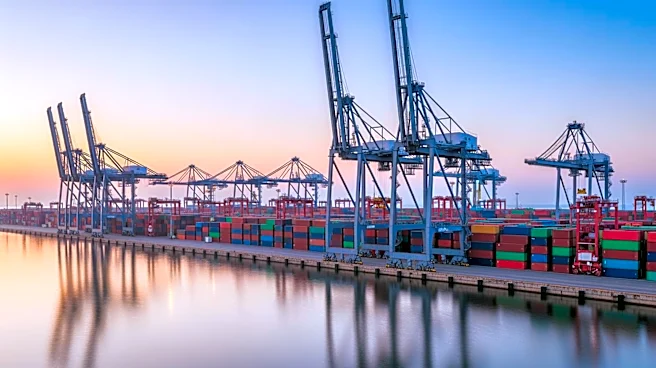
The Port of Baltimore has initiated the construction of a new grain transloading facility aimed at enhancing the efficiency and sustainability of agricultural exports from Maryland. This development is a collaboration between Ports America Chesapeake
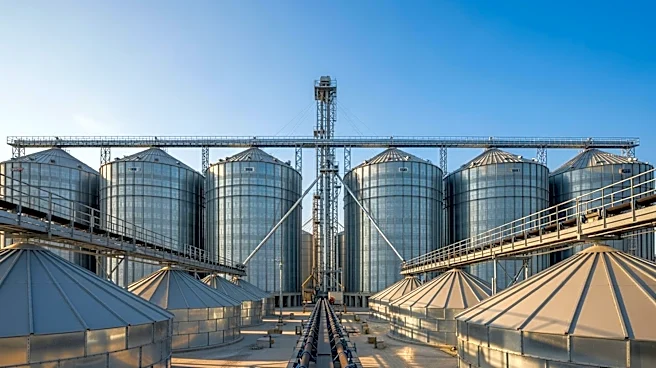
and Frey Commodities, designed to streamline the process for farmers exporting soybeans, corn, and other grains. The facility will feature three silos and a conveyor system that allows direct grain deposit from trucks into containers for global shipping. According to Kevin Atticks, Secretary of the Maryland Department of Agriculture, this facility will simplify the export process for farmers, who previously had to manage exports independently. The initiative is expected to lower costs and reduce truck mileage, providing farmers with more certainty in selling their crops.
Why It's Important?
The establishment of the grain transloading facility at the Port of Baltimore is significant for Maryland's agricultural sector, as it promises to enhance the state's competitiveness in global markets. By facilitating easier access to international shipping routes, the facility is expected to attract more carriers to the port, thereby increasing export opportunities for local farmers. This development is particularly crucial in light of recent disruptions, such as the collapse of the Key Bridge, which affected local market dynamics. The facility is anticipated to bolster the port's record-breaking container shipping performance, further solidifying its role as a key player in the global agricultural trade.
What's Next?
The grain transloading facility is scheduled to become operational by August of this year. As the facility comes online, stakeholders anticipate increased interest from international carriers, which could lead to a surge in agricultural exports from Maryland. The port's enhanced capabilities may also prompt further investments in infrastructure and technology to support growing demand. Farmers and exporters are likely to benefit from improved logistics and reduced costs, potentially leading to expanded agricultural production and new market opportunities.