







What's Happening?
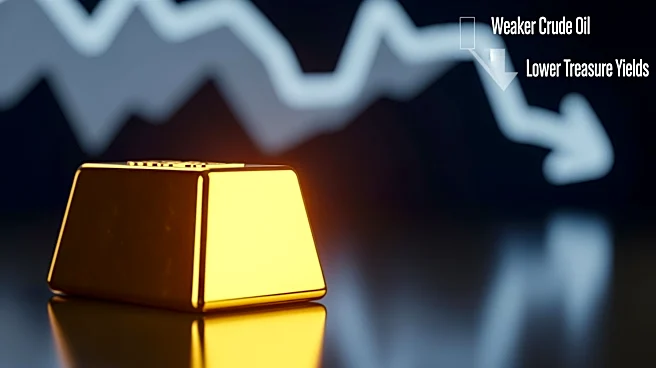
Gold prices experienced their most significant drop since March, following the release of a US jobs report that exceeded expectations. The report, issued by the US Department of Labor, revealed that the economy added 172,000 jobs in May, nearly double
the forecasted 88,000 jobs. This unexpected increase in employment figures has diminished hopes for an imminent interest rate cut by the US Federal Reserve. As a result, gold futures fell by $148, or 3.30%, to $4,353.9 per ounce, erasing much of the metal's gains from earlier in the year. The USD also strengthened, surpassing the 100-point mark on the USD Index for the first time since March, making gold more expensive for international buyers and further pressuring demand.
Why It's Important?
The sharp decline in gold prices highlights the sensitivity of the market to US economic indicators, particularly employment data. The stronger-than-expected jobs report has shifted market expectations regarding the Federal Reserve's monetary policy, with a 96% probability now assigned to the Fed maintaining current interest rates in its upcoming meeting. This shift reduces the likelihood of a rate cut, which had previously supported gold prices. The strengthening USD, driven by the robust jobs data, further complicates the outlook for gold, as it becomes more costly for buyers using other currencies. This development could lead to increased market volatility and cautious sentiment among investors, particularly those relying on technical indicators like the 200-day moving average, which gold prices have now fallen below.
What's Next?
The future trajectory of gold prices will largely depend on upcoming economic data and its influence on the Federal Reserve's policy decisions. Traders and institutional investors may need to reassess their positions, especially if further data continues to support a strong US economy. The market will closely watch for any signs of a trend reversal or continued correction in gold prices. Additionally, the Fed's response to the economic data in its next meeting will be critical in shaping market expectations and the broader financial landscape.