





What's Happening?
Hideo Kojima, renowned for his work in the video game industry, recently faced criticism for his appearance in an AI-generated video for Prada. The video, which featured Kojima and filmmaker Nicholas Winding Refn, was met with backlash from fans who were
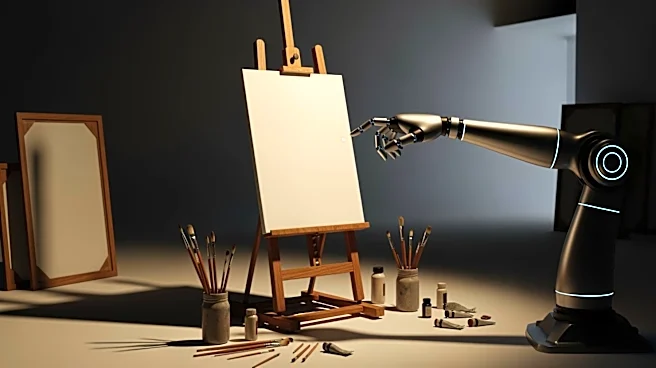
disappointed by his involvement in what they termed 'AI slop.' In response, Kojima expressed skepticism about AI's ability to create art, stating that while AI might play a role in art creation in the distant future, he does not expect to see it in his lifetime. He emphasized that art is inherently human and that AI should be used as a tool for creative chores rather than as a creator itself. Kojima's comments have sparked discussions about the role of AI in creative industries, with some seeing potential in AI for enhancing gameplay dynamics rather than creating art.
Why It's Important?
Kojima's remarks highlight a significant debate in the creative industries about the role of AI in art and entertainment. As AI technology advances, its potential to influence creative processes grows, raising questions about the future of human creativity. Kojima's stance underscores a broader concern that AI could undermine the human element in art, which is often seen as essential to its value. This discussion is crucial for industries that rely on creativity, as it could shape how technology is integrated into artistic processes. The backlash also reflects a cultural resistance to AI's encroachment into traditionally human domains, suggesting that while technology can enhance certain aspects of creation, it may not replace the human touch that defines art.