


What's Happening?
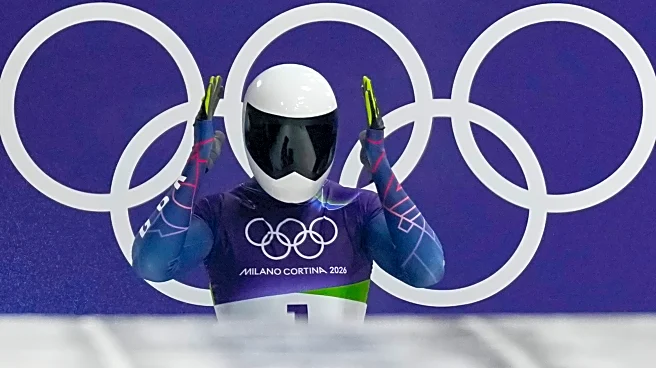
Team GB has continued its impressive track record in the skeleton event at the Winter Olympics 2026 in Milan-Cortina. Despite not having a dedicated ice track in the UK, British athletes have excelled in the sport, with Matt Weston recently winning a historic gold medal. This victory adds to the country's total of ten Olympic medals in skeleton, a sport where the UK has consistently performed well. The success is attributed to a unique training approach that emphasizes maximizing limited practice opportunities. Athletes like Weston and former champions Amy Williams and Lizzy Yarnold have demonstrated that strategic preparation and teamwork can overcome the lack of physical infrastructure.
Why It's Important?
The success of Team GB in skeleton underscores the potential
of innovative training methods and strategic planning in sports. It highlights how countries can excel in international competitions without the same resources as their competitors. This achievement could inspire other nations to rethink their training strategies, focusing on mental preparation and teamwork. For the UK, it reinforces the importance of investing in sports science and coaching to maintain competitive advantages. The continued success in skeleton also boosts national pride and can increase interest and participation in winter sports across the country.
What's Next?
As the Winter Olympics 2026 progresses, Team GB will aim to build on its skeleton success and potentially increase its medal tally. The focus will likely remain on optimizing training and preparation strategies to maintain their competitive edge. Other nations may study the UK's approach to improve their own performance in skeleton and similar sports. Additionally, the UK might consider investing in infrastructure to further support its athletes, potentially leading to even greater success in future competitions.