


What's Happening?
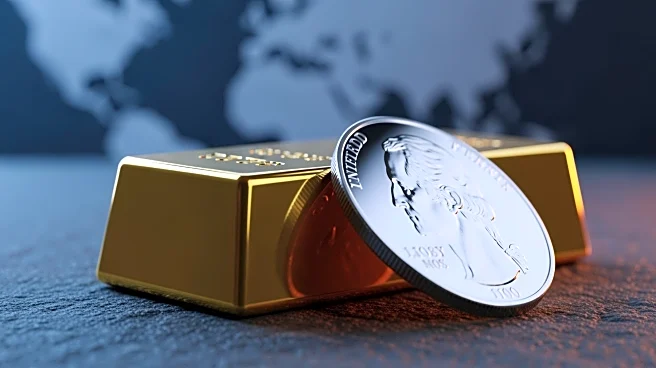
Silver prices have reached a record high, surpassing $70 an ounce, while gold prices have slightly eased following the release of stronger-than-expected U.S. economic data. The data indicated that the U.S. economy grew faster than anticipated in the third quarter, which led to a strengthening of the U.S. dollar. This development has made dollar-priced metals less attractive to international buyers, causing a pullback in gold prices after they hit an all-time high. The surge in silver and gold prices this year has been driven by a combination of geopolitical tensions, U.S. interest rate cuts, strong central bank purchases, and robust investment demand. Analysts predict that gold prices could rise towards $5,000 per ounce next year, supported
by central bank foreign reserve diversification.
Why It's Important?
The fluctuations in precious metal prices are significant as they reflect broader economic and geopolitical trends. The rise in silver and gold prices indicates investor concerns over geopolitical tensions and economic stability, prompting a shift towards safe-haven assets. The stronger U.S. economic data and subsequent dollar appreciation highlight the interconnectedness of global markets, where U.S. economic performance can influence commodity prices worldwide. The potential imposition of tariffs on Chinese semiconductor imports by the Trump administration could further impact global trade dynamics, affecting various sectors including technology and manufacturing.
What's Next?
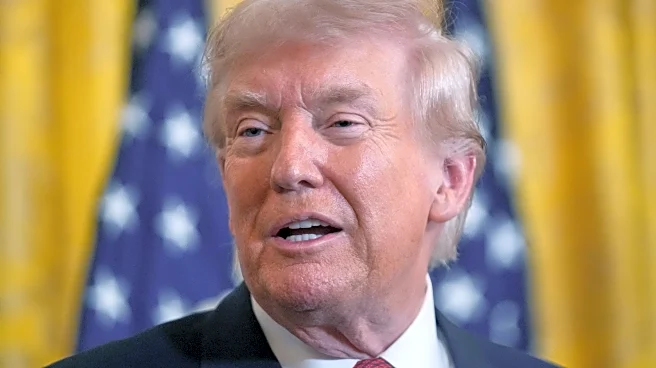
Looking ahead, the precious metals market may experience further volatility as geopolitical tensions persist and economic policies evolve. The Trump administration's proposed tariffs on Chinese semiconductor imports, set to begin in June 2027, could lead to retaliatory measures and impact global supply chains. Additionally, central banks' continued diversification of foreign reserves into gold could sustain upward pressure on gold prices. Investors and policymakers will closely monitor these developments, as they could have far-reaching implications for global trade and economic stability.